Volvo EX60 vs BMW iX3: Which Luxury Electric SUV Is Better for Vancouver Drivers?
Volvo EX60 vs BMW iX3: Which Luxury Electric SUV Is Better for Vancouver Drivers?
Posted on June 12, 2026
Vancouver drivers deal with heavy traffic, frequent rain, steep neighbourhood streets, and regular trips to destinations such as Whistler, Squamish, Vancouver Island, and the Interior. As EV adoption continues to grow in British Columbia, many buyers are looking for luxury electric SUVs that combine long range, fast charging, all-wheel drive capability, and everyday comfort.
The BMW iX3 and Volvo EX60 are two new luxury EVs aimed at Canadian buyers. BMW Group Canada says the iX3 50 xDrive will go on sale in Fall 2026, while Volvo Car Canada has already opened orders for the EX60, with deliveries expected later in 2026.
For Vancouver shoppers, factors such as charging access, winter range, family practicality, dealership support, and long-distance travel can be just as important as performance figures.
Disclaimer: All performance, range, charging, and specification figures are based on manufacturer-published estimates and preliminary Canadian market information at the time of writing. BMW Group Canada and Volvo Car Canada have indicated that final Canadian specifications may be updated as regulatory certification and production details are finalized. Real-world performance will vary based on driving conditions, temperature, terrain, vehicle configuration, and equipment.
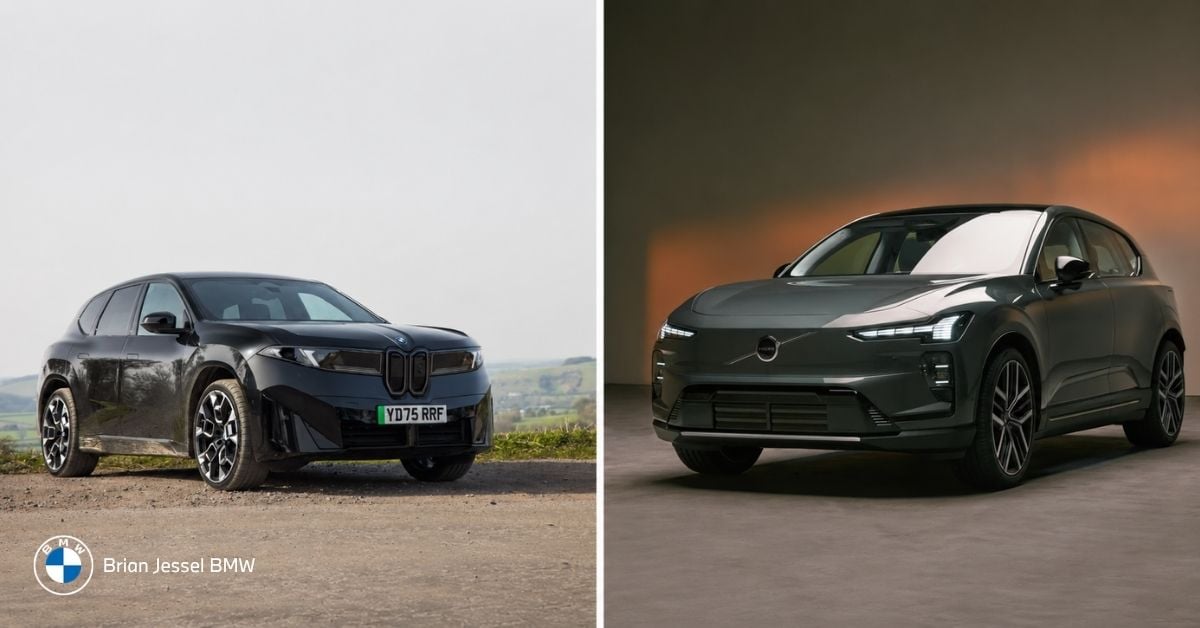
Quick Verdict: Is the BMW iX3 or Volvo EX60 Better for Vancouver Drivers?
The BMW iX3 may appeal more to drivers looking for longer published Canadian range figures, a lower official starting MSRP, and BMW's driver-focused approach. BMW Group Canada lists the iX3 from $75,900 CAD with estimated range up to 698 km (BMW Group Canada published estimated maximum for the Canadian market; final certified range may vary).
The Volvo EX60 may appeal more to buyers who prefer Scandinavian design, Google-based technology, and Volvo's safety-centred brand identity. Volvo Car Canada currently lists the EX60 P10 AWD from $77,500 before freight, PDI, fees, and taxes, with a preliminary estimated range of up to approximately 514 km (subject to final Canadian certification and production confirmation).
For Vancouver buyers choosing between the two, the decision largely comes down to priorities. The BMW iX3 emphasizes published range and driving engagement, while the Volvo EX60 focuses on minimalist luxury, integrated Google technology, and family-oriented practicality.
Volvo EX60 vs BMW iX3: Key Differences at a Glance
The BMW iX3 and Volvo EX60 target a similar group of luxury EV buyers, but they differ in range, pricing, performance, charging, and overall design philosophy. The table below highlights the main published Canadian specifications and features currently available for both models.
| Category | BMW iX3 50 xDrive | Volvo EX60 P10 AWD Electric |
| Canadian Status | Reservations Available; On Sale Fall 2026 | Orders Open; Deliveries Expected Late 2026 |
| Official Canadian Starting Price | $75,900 CAD | $77,500 CAD Before Freight, PDI, Fees, And Taxes |
| Range | Up To 698 km | Up To 514 km (Preliminary) |
| Power | 463 hp | 503 hp |
| Torque | 476 lb-ft | 524 lb-ft |
| 0–100 km/h | 4.9 Seconds | 4.6 Seconds |
| Top Speed | 210 km/h | 180 km/h |
| Drivetrain | Dual-Motor AWD | AWD |
| Electrical System | 800 V | 800 V |
| DC Charging | Up To 400 kW; 10–80% In About 21 Minutes | Up To 400 kW; 10–80% In About 18 Minutes |
| Cargo Capacity | 520 L To 1,750 L | 634 L To 1,647 L |
| Towing Capacity | Not Confirmed In Official Canadian Source | Up To 2,040 kg |
| Technology | BMW Panoramic iDrive, Operating System X | Google Built-In, OTA Updates |
| Cabin Character | Driver-Focused Layout | Scandinavian Minimalism |
Several Volvo EX60 specifications remain preliminary and subject to change as final Canadian certification data becomes available. BMW Group Canada has published Canadian-market figures; however, final certified specifications and real-world results may differ once independently validated.
Which Electric SUV Performs Better on Vancouver Roads: BMW iX3 vs Volvo EX60?
The BMW iX3 is designed around BMW's traditional driving character. BMW says its new Heart of Joy system combines drive, braking, and vehicle dynamics control into a central system designed to improve responsiveness and precision.
The Volvo EX60 takes a different approach. While its published power figure is higher at 503 hp, Volvo positions the vehicle around comfort, refinement, and safety. Its cabin environment and suspension tuning appear to prioritize smooth daily driving rather than sport-oriented handling.
For drivers who regularly travel the Sea-to-Sky Highway or North Shore roads, the BMW iX3 may appeal more to those seeking a more connected driving experience. Buyers who prefer a calmer ride may find the Volvo EX60 more aligned with comfort-oriented driving preferences.
Range and Charging Comparison for British Columbia EV Drivers
Range is a key consideration for luxury EV buyers in British Columbia, especially for longer trips to destinations like Whistler and Kelowna where charging convenience and highway range matter.
BMW Group Canada indicates an estimated maximum range of up to approximately 698 km for the iX3 50 xDrive (Canadian estimate; final certification may vary). Volvo Car Canada lists preliminary estimates of up to approximately 514 km for the EX60 P10 AWD, with a higher-range variant estimated at about 640 km.
Both vehicles support high-power DC fast charging, with estimated 10–80% times of approximately 21 minutes for the BMW iX3 and 18 minutes for the Volvo EX60 under ideal conditions. Charging performance will vary based on temperature, charger output, and battery state.
For Vancouver-to-Whistler trips, both offer sufficient range for typical use, while longer routes across B.C. may benefit from the BMW iX3’s higher estimated range. BC Hydro notes public fast charging across major provincial travel corridors, with current rates of $0.3969/kWh (DC fast charging) and $0.3083/kWh (Level 2) as of April 1, 2026.
Home Charging and Long-Distance EV Ownership in British Columbia
For many Vancouver drivers, day-to-day charging may be more important than maximum range figures. Buyers with home charging can typically start each morning with a full battery, while condo residents should confirm access to dedicated EV charging infrastructure before purchasing.
Battery preconditioning and thermal management can also play an important role during colder months. Both vehicles are designed to support DC fast charging on long-distance trips, but charging speeds are generally optimized when the battery is prepared for fast charging before arrival at a charger.
Drivers considering an electric SUV for regular travel between Vancouver, Whistler, Kelowna, Kamloops, or Vancouver Island may benefit from discussing home charging solutions, public charging options, and EV ownership planning with the EV specialists at Brian Jessel BMW before making a purchase decision.
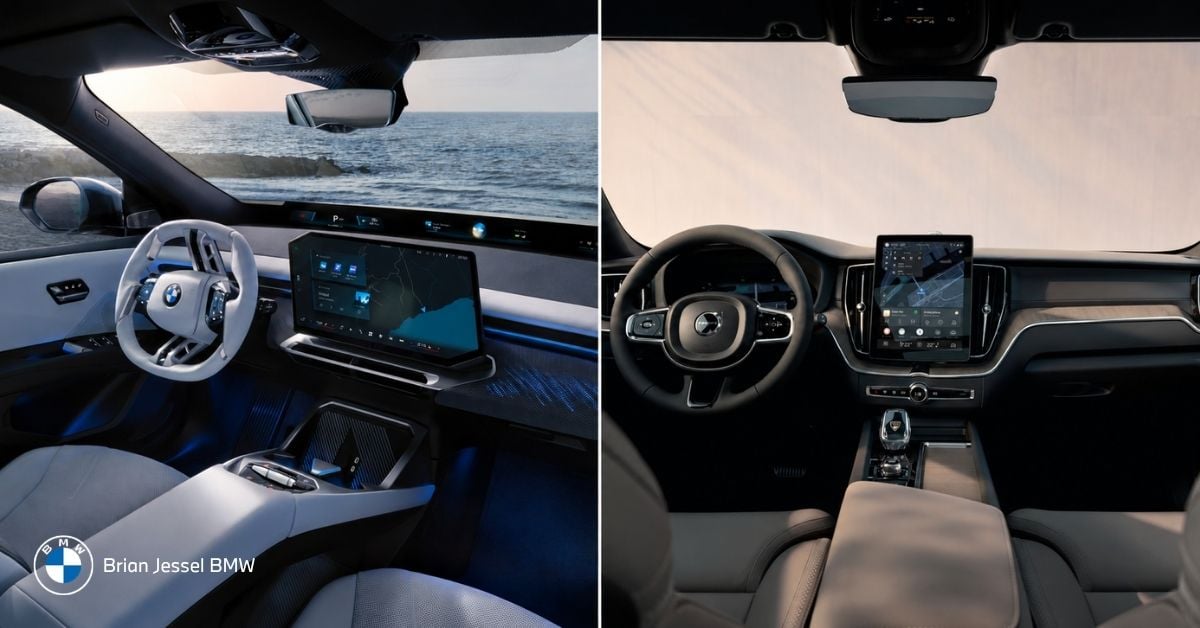
BMW iX3 vs Volvo EX60 Interior Luxury: Scandinavian Minimalism or BMW Driver-Focused Design?
The Volvo EX60 follows Volvo's familiar Scandinavian design philosophy. The cabin focuses on simplicity, sustainable materials, Google built-in technology, and a clean layout with minimal visual clutter.
The BMW iX3 takes a more driver-centred approach. BMW Panoramic iDrive, BMW Operating System X, BMW Panoramic Vision, and the available 3D Head-Up Display place driving information directly within the driver's field of view.
Both vehicles support wireless smartphone integration and over-the-air software updates. The primary difference is in how information is presented to the driver. Volvo prioritizes simplicity and a clean visual environment, while BMW emphasizes immersive displays and direct driver interaction.
Beyond technology, the two cabins create different ownership experiences. Volvo emphasizes minimalist design, sustainable materials, and a calm interior atmosphere, while BMW combines premium materials with a more driver-focused layout and stronger emphasis on engagement behind the wheel. Buyers prioritizing long-distance comfort may appreciate both approaches, although BMW places greater emphasis on cockpit ergonomics and driver interaction, while Volvo leans further toward relaxation and simplicity. Available premium audio systems, seating upgrades, and comfort features vary by trim and package selection.
Buyers who spend significant time commuting through Metro Vancouver may find either approach appealing depending on their personal preferences and familiarity with each interface ecosystem and final production software layouts.
Which SUV Is Better for Vancouver Winters?
Winter driving in Metro Vancouver often means heavy rain, slush, freezing temperatures, and occasional snow rather than prolonged extreme cold. Drivers heading toward Cypress Mountain, Grouse Mountain, Mount Seymour, Whistler, or the Coquihalla face additional traction and range considerations.
Both SUVs use all-wheel drive and 800-volt electrical architectures. The BMW iX3 combines AWD with BMW Heart of Joy and Dynamic Performance Control technologies, while the Volvo EX60 combines AWD with Volvo's latest driver-assistance and safety systems.
Cold weather can reduce EV range in any electric vehicle. BMW notes that actual range depends on driving habits and conditions, while Volvo notes that temperature, weather, terrain, battery condition, and driving style can all affect range and charging performance.
For most Vancouver-area drivers, winter tires, battery preconditioning, and access to reliable charging infrastructure will likely have a greater impact on day-to-day winter usability than the performance differences between these two vehicles.
Technology and Driver Assistance Features Compared
BMW’s technology package centres around BMW Panoramic iDrive, BMW Operating System X, BMW Panoramic Vision, the BMW Intelligent Personal Assistant, and an available 3D Head-Up Display. BMW also highlights integrated navigation and charging-route planning.
Volvo focuses on Google built-in services, Google Maps, Google Assistant, over-the-air updates, Pilot Assist with lane-change functionality, and its multi-adaptive safety belt system. Wireless Apple CarPlay is also included.
Both BMW and Volvo place a strong emphasis on occupant protection, but they approach safety differently. Volvo has long positioned itself around safety innovation and integrates features such as Pilot Assist, collision avoidance technologies, and advanced occupant-protection systems throughout its lineup. BMW combines comprehensive driver-assistance systems with a greater focus on supporting driver awareness and vehicle control through features such as adaptive cruise control, lane-centering assistance, collision warnings, and integrated navigation-based safety functions.
For Vancouver drivers, both vehicles offer technologies designed to assist in heavy traffic, wet-weather commuting, highway travel, and long-distance driving. Buyers who prioritize Volvo’s longstanding safety-focused brand identity may prefer the EX60, while drivers who value a balance between safety systems and driving engagement may find the BMW iX3 more aligned with their preferences.
Both systems deliver modern navigation, smartphone connectivity, driver-assistance features, and EV route planning based on manufacturer-published and preliminary market specifications at the time of writing.
The biggest distinction is ecosystem preference: buyers already familiar with Google services may appreciate Volvo’s interface, while existing BMW owners may find BMW’s latest iDrive environment more familiar.
Which Luxury EV SUV Is More Family-Friendly?
Family buyers often look beyond performance figures. Cargo space, rear-seat comfort, child-seat installation, pet transportation, and road-trip practicality can be just as important.
The Volvo EX60 provides up to 634 L of cargo space behind the rear seats and up to 1,647 L with the rear seats folded. Volvo also includes a front trunk and an underfloor storage compartment.
The BMW iX3 provides 520 L of cargo capacity behind the second row and up to 1,750 L with the rear seats folded. BMW also includes 58 L of front storage space.
For Costco runs, ski equipment, camping gear, and Vancouver Island travel, both vehicles offer practical cargo solutions. The Volvo provides more published cargo volume behind the rear seats, while the BMW offers more maximum cargo space with the rear seats folded.
Volvo also publishes a maximum towing capacity of 2,040 kg for the EX60 P10 AWD. A comparable Canadian towing figure was not available in the official BMW Canada iX3 sources reviewed.
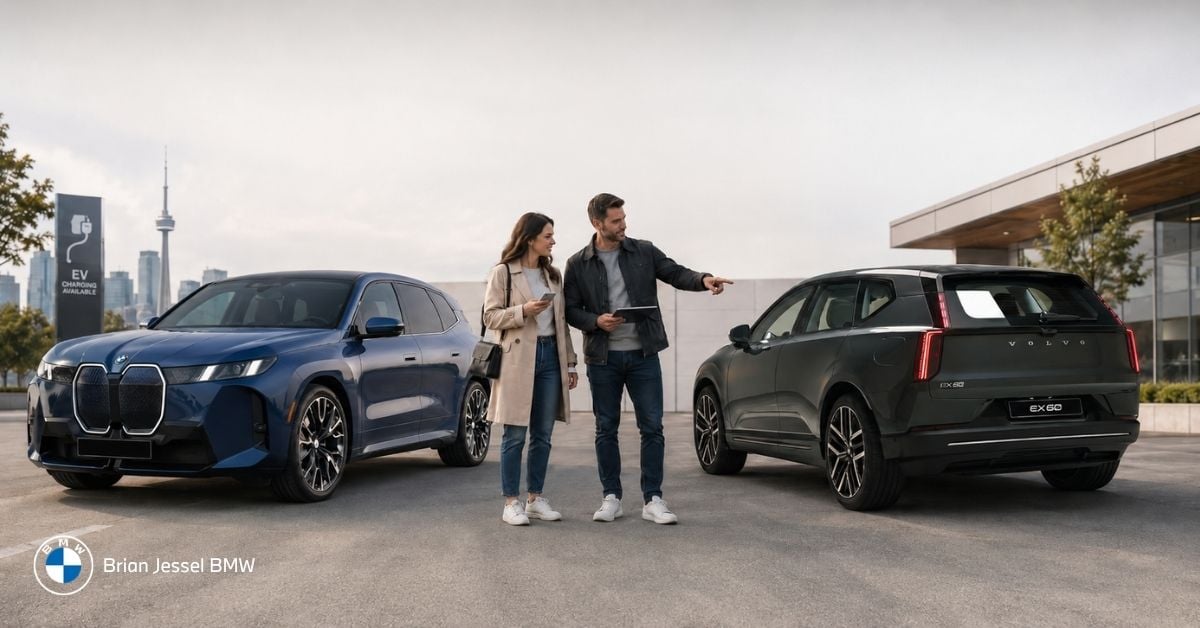
Ownership Costs: BMW iX3 vs Volvo EX60 in Canada
BMW Group Canada lists the 2027 BMW iX3 50 xDrive with a starting MSRP of $75,900 CAD. Volvo lists the EX60 P10 AWD Plus from $77,500 CAD and the Ultra trim from $84,000 CAD, before freight, PDI, fees, and taxes.
Charging costs depend on where the vehicle is charged. BC Hydro's public charging network currently charges $0.3083 per kWh before tax for Level 2 charging and $0.3969 per kWh before tax for DC fast charging.
Maintenance requirements for both vehicles should be lower than comparable gasoline luxury SUVs because EVs have fewer engine-related service items. However, owners should still budget for tires, brake service, cabin filters, software updates, and seasonal maintenance.
Ownership Costs and Incentives for Vancouver EV Buyers
Insurance costs vary based on vehicle value, repair costs, driving history, and location. Buyers should obtain insurance quotes before purchasing either model, particularly given the advanced technology and premium components in luxury EVs.
Warranty coverage, battery warranty terms, and long-term software support can also influence ownership satisfaction, so it’s important to review manufacturer coverage and maintenance programs when comparing vehicles.
The B.C. CleanBC Go Electric Passenger Vehicle Rebate program was paused on May 15, according to BC Hydro. Buyers should confirm current provincial and federal incentive availability before making a purchase decision.
Ownership costs for Vancouver EV buyers are often shaped as much by usage patterns as by purchase price. Charging habits, annual mileage, and access to home charging can significantly affect long-term cost of ownership.
BMW iX3 vs Volvo EX60: Which Electric SUV Holds Value Better in Canada?
It is too early to make firm resale-value predictions for either vehicle because both are entering the Canadian market during 2026. Future resale values will depend on battery condition, software support, mileage, maintenance history, market demand, and broader EV market trends.
BMW benefits from a large Canadian retailer network, established brand recognition in the luxury segment, and a well-developed Certified Pre-Owned ecosystem, which may support buyer confidence in the used-vehicle market over time. These factors can contribute to buyer confidence in the used-vehicle market, although they do not guarantee future resale performance.
Volvo benefits from strong brand recognition in safety-focused and family-oriented segments, which may also support long-term demand among certain buyers.
As both vehicles accumulate real-world ownership history in Canada, factors such as battery durability, software support, charging performance, and dealership service experiences may become increasingly important influences on long-term value retention.
Should You Choose the BMW iX3 or Volvo EX60?
The BMW iX3 may appeal more to buyers looking for longer published Canadian range, BMW driving dynamics, a lower official starting MSRP, and a driver-focused cabin. It may also suit drivers who regularly travel longer distances throughout British Columbia.
The Volvo EX60 may appeal more to buyers who prefer Scandinavian design, Google-based technology, Volvo's safety-oriented positioning, and an order process already open in Canada.
Both luxury electric SUVs offer fast charging, all-wheel drive capability, and premium features designed for Canadian drivers. For Vancouver buyers, the choice is less about capability and more about which ownership experience, technology approach, and driving character best aligns with individual preferences and use cases.
Keep Reading: BMW iX3 vs iX in 2026
Explore the BMW iX3 at Brian Jessel BMW in Vancouver
Brian Jessel BMW can help Vancouver drivers learn more about the BMW iX3 before its Canadian launch. Questions about reservations, charging, winter driving, financing, trade-ins, and BMW EV ownership can all be discussed with the dealership's EV specialists.
Drivers considering the BMW iX3 can also learn more about home charging, public charging, EV service requirements, financing options, trade-in opportunities, and available BMW electric vehicle inventory through Brian Jessel BMW.
FAQs
1. Is the BMW iX3 Better Than the Volvo EX60 for Winter Driving?
The BMW iX3 offers AWD, BMW Heart of Joy, and up to 698 km of published Canadian range. The Volvo EX60 also offers AWD and advanced safety technologies. Winter tires and route planning remain important for either SUV.
2. Which Electric SUV Has Longer Range in Canada?
BMW currently publishes up to 698 km for the iX3 50 xDrive. Volvo currently lists up to 514 km for the EX60 P10 AWD as a preliminary estimate.
3. Is the BMW iX3 Worth Buying in Vancouver?
The BMW iX3 may appeal to Vancouver drivers looking for long range, fast charging capability, AWD, and BMW's driver-focused design philosophy.
4. Does Cold Weather Reduce EV Range in British Columbia?
Yes. BMW and Volvo both note that weather, temperature, terrain, and driving conditions can affect electric driving range.
5. Which Luxury EV SUV Has the Better Interior?
This depends on buyer preference. BMW focuses on a driver-oriented layout, while Volvo focuses on Scandinavian minimalism and Google-based technology.
6. Is the Volvo EX60 Safer Than the BMW iX3?
There is not enough Canadian safety-rating data available yet to make that conclusion. Both manufacturers highlight advanced safety and driver-assistance technologies.
7. Which EV SUV Charges Faster?
Volvo currently lists approximately 18 minutes for a 10–80% charge, while BMW lists approximately 21 minutes. Both figures depend on charging conditions and charger output.
8. Can the BMW iX3 Handle Mountain Driving in BC?
Yes. The BMW iX3 combines AWD, dual electric motors, regenerative braking, and BMW's latest driving-dynamics technologies for varying road conditions throughout British Columbia.
Note: Vehicle specifications, pricing, and availability are based on manufacturer and Canadian market information available at the time of publication. Specifications may change without notice. Readers should confirm final details with authorized dealerships before making purchase decisions.
Explore Latest Models Here: 2026 BMW Cars, 2025 BMW Cars, BMW Gas Vehicles, BMW Electric Car, BMW M Series for Sale, BMW Luxury Line for Sale, BMW Convertible, 2025 BMW 5 Series 530i xDrive, 2024 BMW X3 M40i xDrive, BMW X Series Comparison