BMW iX3 vs iX in 2026: Which BMW Electric SUV Is Right for You?
BMW iX3 vs iX in 2026: Which BMW Electric SUV Is Right for You?
Posted on April 28, 2026
For 2026, BMW’s electric SUV lineup in Canada is expected to expand to include two distinct vehicles: the established BMW iX (currently available in xDrive45, xDrive60 and M70 xDrive trims) and the all-new BMW iX3, which BMW has announced for the Canadian market with final specifications and availability still to be confirmed.
Both are fully electric and expected to use BMW’s xDrive all-wheel drive system in their Canadian configurations. But they are built on different platforms, deliver different charging capabilities, and target different buyers.
For drivers in Vancouver and the Lower Mainland, this decision often comes down to three practical questions:
- How important is ultra-fast charging?
- Do I need the extra size of the iX?
- Is the price difference justified for how I actually drive?
Here’s a clear look at what truly sets them apart, so you can decide with confidence.
BMW refers to its SUVs as Sport Activity Vehicles (SAVs), emphasizing performance and on-road dynamics. For clarity, this guide uses “SUV”, the term most drivers recognize, when discussing BMW’s off-road-capable models.
Note: The 2026 BMW iX3 has not yet officially launched in Canada. The vehicle was previewed at the 2026 Canadian International AutoShow in Toronto, and the specifications referenced in this article are based on BMW’s preliminary global announcements and early Canadian communications. Final specifications, pricing, and availability remain subject to confirmation by BMW Canada.
BMW iX3 vs iX at a Glance (2026 Canada)
Here’s a quick way to compare BMW iX3 vs BMW iX in 2026 using the numbers that matter most to Canadian buyers, including price, range, performance, space, and charging.
| Category | BMW IX3 50 XDrive 2026 | BMW IX XDrive45 2026 | BMW IX XDrive60 2026 | BMW IX M70 XDrive 2026 |
| Starting MSRP (BC) | Pricing Pending Confirmation | $89,900 | $94,900 | $129,900 |
| Range (Estimated) | Up to ~650 km (Preliminary, Subject to Canadian Confirmation) | About 502 Km | About 586 Km | About 488 Km |
| Horsepower | 463 hp | 408 hp | 536 hp | 650 hp |
| Torque | 476 lb-ft | 516 lb-ft | 564 lb-ft | 811 lb-ft |
| Drivetrain (RWD Vs AWD) | AWD | AWD | AWD | AWD |
| Cargo Space (Rear Seats Up) | 520 L + 58 L Frunk | 500 L | 500 L | 500 L |
| 0–100 Km/H | ~4.9 S | ~5.1 S | ~4.6 S | ~3.8 S |
| Charging Speed (Dc 10–80%) | ~21 Min/Up to 400 Kw | ~34–35 Min (Up to 175 Kw) | ~35 Min (Up to 195 Kw) | ~35 Min (Up to 195 Kw) |
| Battery Size (Gross) | ~111 kWh | ~100 kWh | ~113.4 kWh | ~108.9 kWh |
Note: Specifications, pricing, and availability for 2026 Canadian models are subject to change and may vary prior to official release. iX3 figures shown are based on preliminary global specifications and are subject to confirmation for the Canadian market.
What Those Differences Mean in Real Life
The table above highlights several practical points that matter for Canadian drivers, particularly in Vancouver and the Lower Mainland:
Charging Capability: The iX3’s advanced charging architecture is expected to support DC charging speeds of up to ~400 kW based on BMW’s preliminary figures, compared with the iX trims. Under compatible conditions, this could reduce 10–80% fast-charge stops to roughly 21 minutes under ideal conditions, offering an advantage on longer drives or during quick mid-day stops.
Range: The iX3’s estimated up to 650 km range figure gives it a theoretical lead over the iX trims. However, actual range will vary with conditions such as climate, wheel size, driving habits, and colder temperatures common in BC winters.
Power and Performance: The iX45 starts with solid performance for everyday use and is the most accessible iX. The iX60 balances stronger acceleration with long-distance capability, while the M70 is focused on high performance. The iX3’s figure slots it into the mid-range for power and acceleration but with a system designed for modern EV behaviour.
Cargo and Practical Space: The iX3’s rear cargo volume is slightly larger on paper and gains an extra front storage area, useful for daily errands or organised packing. The overall exterior footprint still slightly favours the iX family in length, which can translate to a more spacious cabin feel overall.
Price Spread: Including the iX xDrive45 in the comparison illustrates how BMW structures the iX lineup, from the more accessible entry level through to performance-focused trims, and positions the newer iX3 alongside these offerings in a way that recognizes both value and expected technological advancements.
What Are the BMW iX3 and BMW iX?
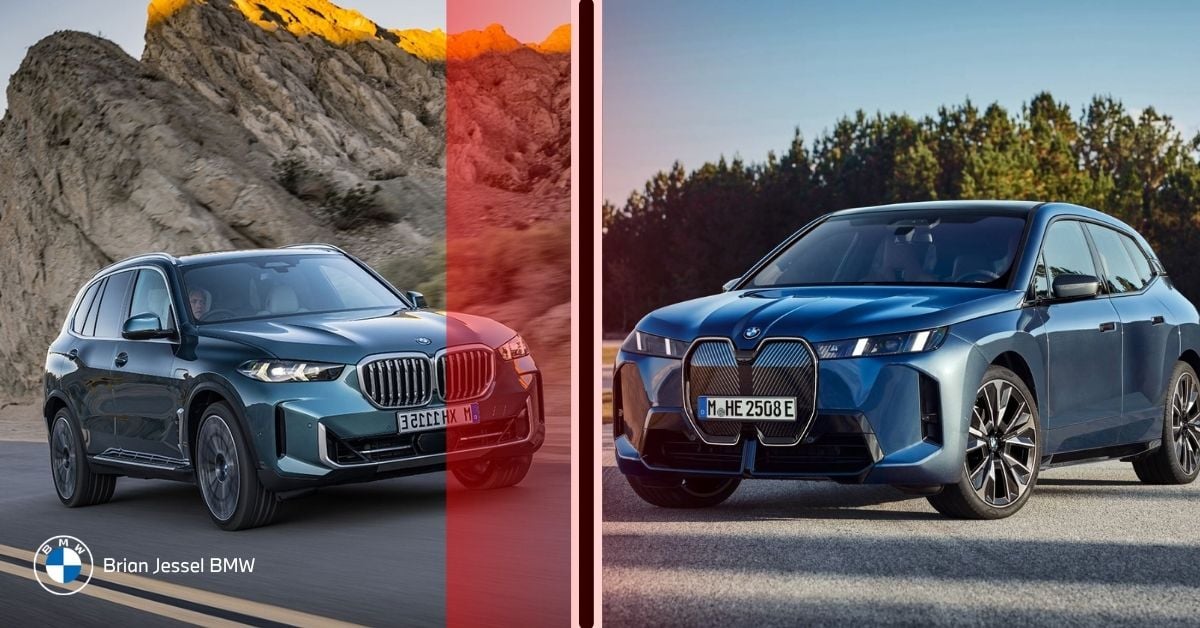
The BMW iX and the BMW iX3 represent two different generations of BMW electric SUVs in Canada. The BMW iX has been on the Canadian market for several years. It was developed from the start as a fully electric SUV and serves as BMW’s larger, more established luxury EV. For 2026 in Canada, the lineup includes:
- xDrive45
- xDrive60
- M70 xDrive
The BMW iX3 is all-new for 2026 and represents the first production model built on BMW’s Neue Klasse architecture. According to BMW’s early announcements, it is expected to introduce key updates such as:
- 800-volt electrical system
- Up to 400 kW DC charging capability
- BMW Panoramic iDrive interface
- Integrated drive and chassis control system (“Heart of Joy”)
In Canada, the iX3 is planned to launch as the 50 xDrive model, with final specifications and timing subject to confirmation.
In simple terms:
- iX3 is BMW’s next-generation midsize electric SUV focused on newer technology and faster charging.
- iX is the larger, more established luxury electric SUV with more trim and performance variation.
Note: BMW Canada is presenting the iX3 50 xDrive for Canada, and notes availability from March 2026 in selected markets (with final specs and availability subject to change)
BMW iX3 Size Comparison: Is the iX Bigger?
Yes, and the difference is noticeable in everyday use. The BMW iX measures 4,965 mm long and 1,970 mm wide, compared to 4,782 mm and 1,895 mm for the BMW iX3. That extra 183 mm in length and added width give the iX a broader, more substantial feel on the road. Inside, it translates to slightly more shoulder room and a more open cabin impression.
The iX also rides on a 3,000 mm wheelbase, contributing to strong rear legroom and stable highway manners. The iX3’s shorter wheelbase reflects its midsize proportions and slightly easier manoeuvrability.
Based on preliminary specifications, the iX3 is expected to offer approximately 520 litres of cargo space behind the rear seats, compared to 500 litres in the iX. Both expand to up to 1,750 litres with the seats folded, and the iX3 adds 58 litres of front storage for charging cables.
What Does It Mean in Daily Life?
Numbers only tell part of the story. The real difference between the iX and iX3 shows up in how they feel on your daily commute, during weekend errands, and when you are maneuvering through Vancouver traffic or parking structures.
Which feels more spacious inside?
The iX feels wider and airier, especially across the front seats. The broader cabin and longer wheelbase give it a more relaxed, luxury-SUV atmosphere.
Which is better for families?
Both are family-capable five-seat SUVs. The iX offers slightly more rear-seat breathing room. The iX3 counters with strong cargo capacity and easier overall proportions. For families with garage space and frequent highway travel, the iX may feel more accommodating. For urban households, the iX3’s packaging is efficient without feeling cramped.
Which works better for downtown Vancouver parking?
Width matters more than length in older parkades in Kitsilano, Mount Pleasant, or parts of downtown Vancouver. The iX’s extra 75 mm of width is noticeable when opening doors in tight spaces. The iX3’s narrower body makes day-to-day parking slightly less stressful.
BMW iX3 vs iX Specs: Power & Driving Experience
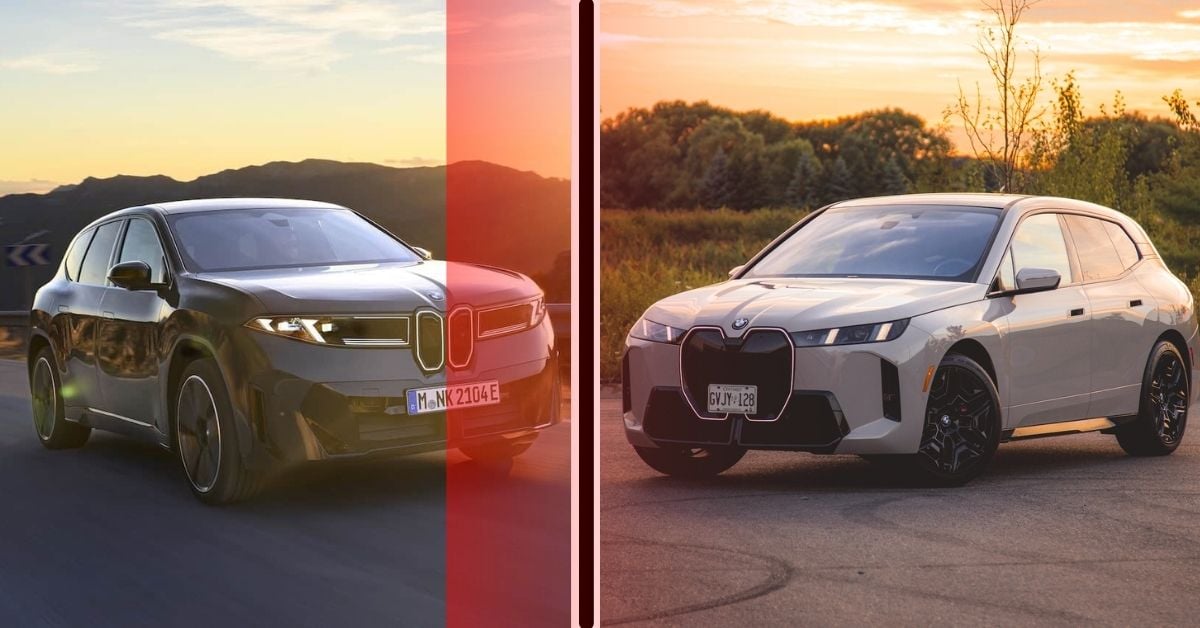
On paper, the numbers between the BMW iX3 and BMW iX are close in some areas, but the way they deliver power and handle real-world driving in British Columbia feels different.
Which Feels More Powerful?
The iX M70 is clearly the most forceful. Its 650 hp and sub-4-second acceleration create a level of thrust that feels closer to a performance SUV than a traditional luxury EV.
The iX xDrive60 follows closely. It feels very strong in real-world driving, particularly during highway merging and passing. The iX3, at 463 hp, feels quick and responsive but not aggressive. The xDrive45 delivers solid performance, though it is tuned more toward refinement than outright force. If peak acceleration is your priority, the M70 is the clear leader.
Learn More: BMW iX: Full Guide to Specs
Which Is Sportier?
The M70 again takes the lead. Its calibration, chassis tuning and acceleration profile make it the most performance-focused of the group.
Based on early previews, the iX3 is expected to feel agile and well-balanced. Built on the newer Neue Klasse platform with integrated drive and chassis control, it feels cohesive and well-balanced. It is not as explosive as the M70, but it feels lighter and more precise in urban driving.
The xDrive60 strikes a middle ground: strong and composed without the sharper edge of the M70.
Which Is Smoother?
The iX, especially in xDrive60 form, feels the most composed at highway speeds. Its longer 3,000 mm wheelbase and broader stance contribute to stability and ride isolation. On long drives from Vancouver toward Kelowna or Victoria ferry terminals, it feels planted and relaxed.
Initial reports suggest the iX3 may have a slightly firmer, more connected feel. The difference is subtle but noticeable over extended highway travel.
Which Is Better for Snowy BC Winters?
All variants use electric xDrive AWD with instant torque control. From a traction standpoint, they are equally capable when equipped with proper winter tires.
The iX’s additional mass gives it a very stable feel at highway speeds in poor weather. The iX3, being slightly smaller, can feel easier to manage in tighter city streets during heavy snowfall.
For North Shore hills or trips to Whistler, both provide strong grip and predictable power delivery.
How Does Range Change in Cold Climates?
Estimated maximum ranges for 2026 in Canada are approximately 502 km (iX xDrive45), 586 km (iX xDrive60), 486 km (iX M70 xDrive), and up to 650 km (iX3 50 xDrive) based on BMW’s published figures. Actual driving range will vary.
In British Columbia winter conditions, cold temperatures, elevation changes, and sustained highway speeds, such as on the Sea-to-Sky Highway, can reduce real-world range compared with official estimates.
A key technical distinction of the iX3 is its 800-volt system, which BMW indicates is expected to support up to 400 kW DC fast charging (10–80% in about 21 minutes under ideal conditions). The iX models use a 400-volt system, charging at up to roughly 175–195 kW, resulting in longer fast-charge sessions.
Range & Charging in Canada: Which One Is More Practical?
Metro Vancouver's expanding DC fast-charging infrastructure is a major benefit for EV owners, particularly with high-power stations along key routes like Highway 1 and the Sea-to-Sky Highway. The BMW iX3 is expected to support DC fast-charging speeds of up to 400 kW based on BMW’s preliminary specifications, positioning it for compatibility with next-generation ultra-rapid charging networks once it becomes available in Canada. By comparison, current BMW iX models support DC charging rates of approximately 175–195 kW.
For home charging, all iX trims support 11 kW AC charging, while early reports suggest the iX3 may support up to 15.4 kW AC charging, though final Canadian specifications remain unconfirmed, which could make it the faster home charging option for homes equipped with compatible 240V installations.
In detached homes, both vehicles are practical. However, in apartment settings, the availability of building infrastructure will be a critical factor for easy charging access.
Given BC’s climate, cold temperatures may reduce real‑world range by up to 25%, but both vehicles offer ample driving range for most daily needs, even in challenging conditions.
Learn More: BMW iX Charging Guide
Interior & Comfort: Luxury, Space & Technology
The BMW iX offers a traditional BMW luxury experience, with a wide, driver-focused cabin, high-quality materials, and established technology. Its curved digital display and premium audio systems create a refined, modern atmosphere, while generous cabin width and rear legroom give it an expansive feel.
BMW has indicated that the upcoming iX3 is expected to introduce next-generation interface technology, including the Panoramic Vision projection display across the base of the windshield. Early details also reference a large central display and an available 3D head-up display, emphasizing advanced digital integration.
Both vehicles are positioned to deliver strong comfort and premium appointments. The iX3’s projected interface may appeal more to technology-focused drivers, while the iX remains well suited to those who prefer a more classic luxury SUV experience.
BMW iX vs iX3 Price in Canada (2026)
BMW iX Pricing in British Columbia (2026 MSRP):
- xDrive45: $89,900
- xDrive60: $94,900
- M70 xDrive: $129,900
Pricing for the BMW iX3 will be confirmed closer to its Canadian launch but is expected to be competitively priced in the luxury electric SUV market.
Lease and Financing Options with Brian Jessel BMW
Leasing or financing the iX or iX3 offers flexibility. Brian Jessel BMW provides custom leasing options and financing through BMW Financial Services, ensuring that you get the best possible terms tailored to your needs.
For further details on monthly payments, financing rates, or trade-ins, contact Brian Jessel BMW at (844) 535-5327 or visit 2311 Boundary Road, Vancouver, BC.
-All pricing is based on British Columbia MSRP and does not include taxes and fees. Dealer pricing may differ. Prices are subject to change anytime without notice.
BMW iX3 vs iX: Long-term Ownership Costs & Value
In British Columbia, electricity remains cost-effective compared with gasoline, particularly for owners charging at home under BC Hydro residential rates. For most daily commuting in Metro Vancouver, energy costs are predictable and relatively stable.
According to the official BMW Warranty page for Canada, new BMW vehicles include a 4-year / 80,000 km New Car Limited Warranty. Electric models such as the iX also include an 8-year / 160,000 km High-Voltage Battery Warranty. Extended protection is available through BMW Extended Warranty programs, which can increase coverage duration and may include roadside assistance.
Maintenance requirements are generally lower than combustion vehicles. There are no oil services, and regenerative braking reduces brake wear over time. Service intervals are condition-based and monitored electronically.
Insurance costs vary by trim and output. Higher-performance versions such as the iX M70 may carry higher premiums than mid-range models.
Is the BMW iX 2026 worth the extra investment?
Resale value will depend on trim selection, market demand, and how relevant charging speed and range remain as infrastructure develops. Buyers seeking greater interior space and higher performance may justify the price difference. Those prioritizing charging speed and efficiency may find the iX3 more compelling long-term.
Driving Experience – Which One Feels More “BMW”?
Both models deliver strong electric performance, but their character differs. The BMW iX feels more performance-oriented, especially in xDrive60 and M70 xDrive trims. Its longer wheelbase and greater overall mass contribute to a planted, stable feel at highway speeds (noticeable on longer drives) outside Vancouver.
Available adaptive air suspension (depending on trim) adds ride comfort and composure. Cabin isolation is strong, reinforcing its larger, more refined presence.
Based on previews, the iX3 50 xDrive is expected to feel more balanced and agile. Its integrated drive and chassis control system delivers precise power distribution, and its slightly smaller footprint makes it easier to place in urban settings.
For long-distance touring, the iX feels calmer and more insulated. In tighter city driving, the iX3 is projected to feel lighter and more responsive.
Which BMW Electric SUV Is Right for You?
Choosing between the BMW iX3 and BMW iX comes down to how you drive, where you drive, and what you value most in an electric SUV.
Who Should Choose the BMW iX3?
The BMW iX3 50 xDrive is expected to suit drivers who prioritize charging speed and next-generation technology. Its 800-volt architecture and projected DC fast-charging capability of up to 400 kW are designed to support shorter charging stops on longer trips, such as travel between Vancouver and other cities, once it becomes available in Canada.
It also makes sense for urban residents in Vancouver who want slightly smaller exterior dimensions for tighter parkades and city streets. Buyers interested in BMW’s newest EV platform and interface design will likely be drawn to the iX3’s updated architecture and display system.
Who Should Choose the BMW iX?
The BMW iX xDrive45 fits buyers looking for entry pricing into the iX lineup while gaining a larger cabin and established platform. The iX xDrive60 suits drivers who want more range and stronger acceleration without moving into M-level pricing.
The iX M70 xDrive is oriented toward performance-focused drivers who value rapid acceleration and higher output over maximum range.
| Buyer Priority | BMW iX3 | BMW iX |
| Best for Faster Charging Potential | ✓ | |
| Best for Maximum Luxury Feel | ✓ | |
| Better for Tighter City Parking | ✓ | |
| Best for Winter Driving in BC | ✓ | ✓ |
| Better for Long-Distance Highway Comfort | ✓ | |
| Better for Next-Generation EV Tech | ✓ | |
| Best Balance of Size & Usability | ✓ | |
| Strong Everyday Practicality | ✓ | ✓ |
| Better for Highest Performance | ✓ | |
| Better for Value-Conscious Premium EV Buyers | ✓* | |
| Better for Buyers Wanting the Most Space and Presence | ✓ |
* Potentially Better Value (Pending iX3 Pricing)
In simple terms, the iX3 appears better suited to buyers prioritizing newer EV architecture, faster charging potential, and easier urban use, while the iX is the stronger fit for buyers who want more luxury presence, stronger performance options, and a more established flagship feel.
Why Test Drive at Brian Jessel BMW in Vancouver?
Choosing between the iX3 and iX often becomes clearer behind the wheel. Brian Jessel BMW’s EV-focused product specialists can walk you through platform differences, charging considerations, and trim options in practical terms.
The team can also provide guidance on home charging setup, trade-in evaluations, and what to expect from electric driving in Metro Vancouver and BC winter conditions. Access to current inventory and ordering updates helps you understand availability timelines as well.
Experiencing both models in person often answers questions that specifications cannot. Book your test drive at Brian Jessel BMW or call (844) 535-5327 to speak with a product specialist.
Final Verdict – BMW iX3 vs iX in 2026
For 2026, the BMW iX3 and BMW iX are positioned to serve different priorities within BMW’s electric SUV lineup in Canada. According to BMW’s early published figures, the iX3 stands out for its projected range and significantly faster DC charging capability, making it compelling for drivers who value efficiency and reduced charging time on longer trips.
The BMW iX, particularly in xDrive60 form, offers a larger cabin feel and a more established luxury presence, with the M70 delivering the strongest acceleration in the range.
For many Vancouver drivers, the iX3’s slightly smaller footprint is expected to suit urban parking and daily commuting, while the iX can appeal to those seeking additional interior space and highway composure across BC.
FAQs
Is BMW iX bigger than iX3?
Yes. iX is longer and wider (4,965 mm/1,970 mm) than iX3 (4,782 mm/1,895 mm), so it feels roomier.
BMW iX range vs iX3 range?
Estimated: iX3 up to 650 km (preliminary). iX trims: about 502 km (xDrive45), 586 km (xDrive60), 488 km (M70).
BMW iX charging time?
On DC fast charging, iX trims are roughly 34–35 minutes from 10–80% (about 175–195 kW), depending on trim and conditions.
BMW iX3 interior space?
iX3 is midsize but efficient: about 520 L cargo behind seats plus ~58 L frunk. Cabin feels less wide than iX.
BMW iX vs iX3 Canada price?
BC MSRP for iX: $89,900 (xDrive45), $94,900 (xDrive60), $129,900 (M70). iX3 pricing is still pending confirmation.
Is it worth buying a BMW iX3?
If you value next-gen tech and faster charging, yes. The iX3’s 800V system and up-to-400 kW capability may pay off.
Is the BMW iX3 good for families?
Yes. It is expected to be a five-seat SUV with strong cargo space and easier urban sizing. Families wanting maximum rear-seat room may prefer iX.
Explore Latest Models Here: 2026 BMW Cars, 2025 BMW Cars, BMW Gas Vehicles, BMW Electric Car, BMW M Series for Sale, BMW Luxury Line for Sale, BMW Convertible, 2025 BMW 5 Series 530i xDrive, 2024 BMW X3 M40i xDrive, BMW X Series Comparison, BMW 3 Series G50, 2026 BMW M2 xDrive G87, 2026 BMW X5 G65