How Does BMW’s Regenerative Braking System Handle Coquitlam and North Vancouver Mountain Climbs?
How Does BMW’s Regenerative Braking System Handle Coquitlam and North Vancouver Mountain Climbs?
Posted on September 4, 2026
BMW’s regenerative braking system uses the electric motor for propulsion while climbing and can use that motor as a generator when the vehicle slows on the descent. BMW Canada states that recuperation converts kinetic energy back into electrical energy for the high-voltage battery.
In documented BMW i4 configurations, D-Adaptive changes recuperation according to the road situation, while B calls for the maximum recuperation available when the accelerator is released. Recuperation still has operating limits, so the conventional braking system remains available whenever the electric motor cannot provide the required braking effect.
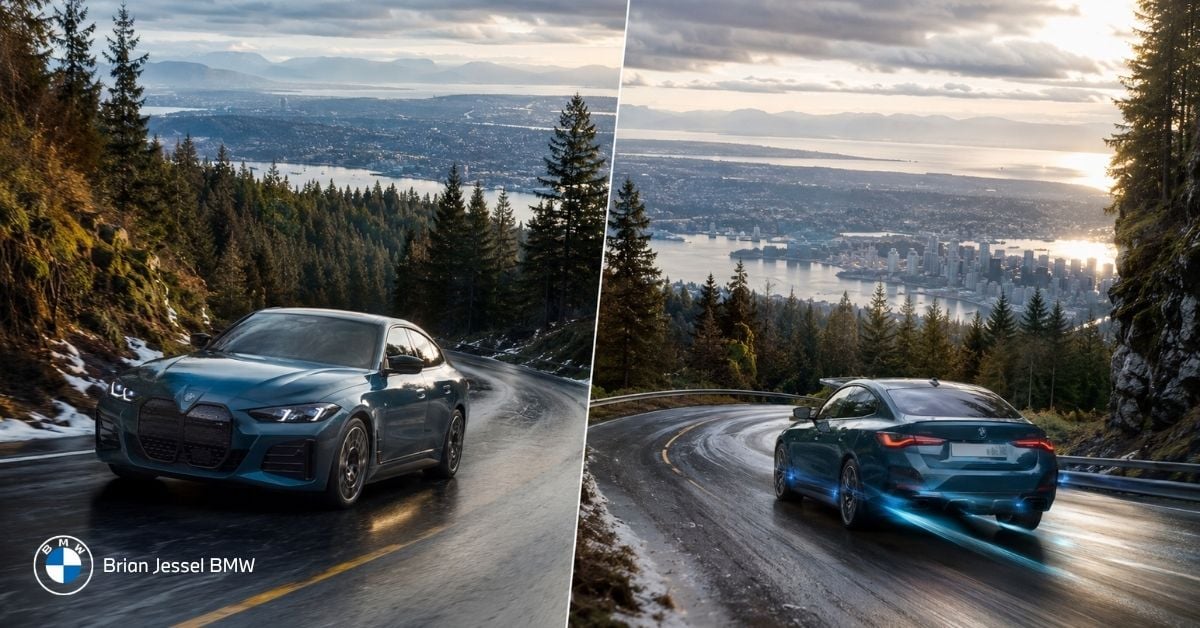
The Mechanics of Elevation: How Does BMW Regenerative Braking Work on Ascents vs. Descents?
On a sustained climb, the electric drive is consuming stored battery energy; the main regenerative opportunity comes when the vehicle later decelerates or travels downhill. BMW Canada specifically notes that EV range varies with route characteristics and that regenerative braking recovers kinetic energy when the vehicle slows.
For drivers travelling between relatively level parts of Metro Vancouver and higher neighbourhoods or mountain destinations, route profile therefore has a direct bearing on energy use.
The Ascent Energy Deficit
Westwood Plateau is a clear Coquitlam example of elevated local terrain, but trail elevation should not be treated as a roadway gradient. The City of Coquitlam states that the 2.2-kilometre Coquitlam Crunch reaches Westwood Plateau with a 242-metre elevation gain. That figure applies to the trail, not nearby roads.
The two North Shore routes differ geographically. Grouse Mountain’s driving route follows Capilano Road for 5 km to the base in North Vancouver. Cypress Mountain is in West Vancouver; Cypress Bowl Road runs 13 km from Highway 1 Exit 8 to the Nordic area and 15 km to the downhill ski area, while Cypress Creek Lodge sits at 915 metres.
The Descent Reversal
When recuperation is active during deceleration, the electric motor changes from supplying propulsion to acting as a generator. BMW Canada describes the process directly: the motor converts the vehicle’s kinetic energy into electrical energy, and that recovered energy can be stored in the high-voltage battery.
BMW’s Canadian i4 documentation also states that the drive unit changes to generator operation when recuperation is requested. Recuperation returns only part of the available energy to the high-voltage battery, so a descent does not restore all the energy used on the climb.
Thermal and State-of-Charge (SoC) Boundaries
A fully charged or temperature-limited battery can reduce or prevent regenerative energy recovery. The 2025 BMW i4 Owner’s Manual states that recuperation may be unavailable when the battery is full or at very low or high temperatures. BMW Canada also notes that cold batteries accept less power and use thermal management to control operating temperature.
Before a long descent, this matters because a full battery cannot accept additional recovered energy. The i4 manual states that the normal brakes then maintain the expected deceleration and warns that prolonged downhill braking can increase brake temperatures. For this reason, BMW advises avoiding a completely full battery before a long descent when practical.
Tailoring Your Descent: BMW B Mode vs. Adaptive Recuperation
B Mode gives a strong, predictable one-pedal response, while D-Adaptive varies recuperation according to the driving situation. BMW Group Canada’s iX technical material states that adaptive recuperation uses navigation information and data from driver-assistance-system sensors..
It can increase recovery when slowing is appropriate and allow coasting on open road. This lets D-Adaptive respond to changing road and traffic conditions without requiring the driver to select a fixed recuperation level.
BMW’s i7 documentation adds a mountain-specific detail: its adaptive recuperation system can take downhill sections into account. Documented i4, iX and i7 versions also allow High, Medium or Low recuperation settings in D, while B calls for the strongest or highest available setting. Because equipment and menu behaviour can change by model and model year, owners should follow the settings shown in their own vehicle and owner’s manual.
BMW Mountain Descent Recuperation Guide |
|||
| BMW Drive Setting | Downhill Response | Best Local Use | Friction Brake Use |
| B Mode | Strong Lift-Off Deceleration | When Strong One-Pedal Control Is Preferred | Added If More Braking Is Needed or Recovery Is Restricted |
| D-Adaptive | Varies Recovery and Can Coast | Roads With Changing Traffic and Conditions | Used When Needed |
| D-Low / Medium / High | Driver-Selected Recovery Level | Familiar Grades Where a Set Response Is Preferred | Used When Needed |
Notes: The settings above reflect documented BMW i4, iX and i7 systems; availability can vary by model and model year. BMW Canada states that the conventional braking system is activated when needed rather than being reserved only for emergencies.
On snow or ice, stronger recuperation does not replace tire grip or normal winter-driving precautions. The i4 manual states that energy recovery can be reduced while stability-control systems are active or adjusting the vehicle.
Cypress Mountain currently states that winter tires are required on Cypress Bowl Road from October 1 to April 30, and the Province of British Columbia requires drivers to obey posted winter-tire and chain signs during the applicable seasonal period.
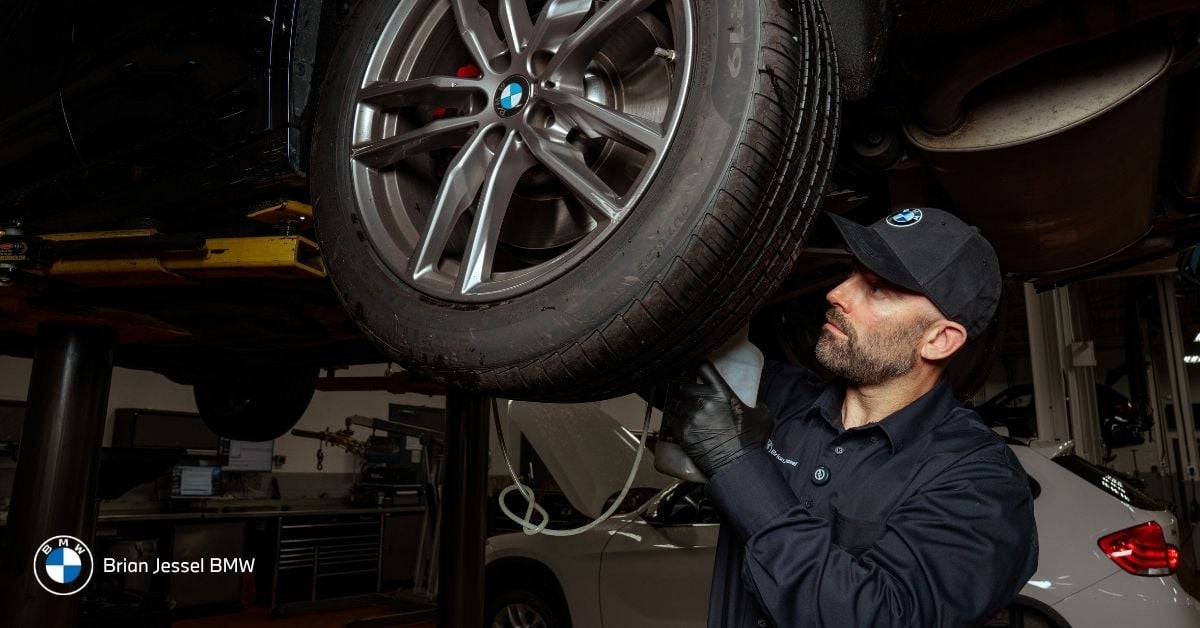
Protecting Your Investment: How Intelligent Energy Recovery Saves Your Brakes
Regenerative braking reduces friction-brake use and helps lower brake wear during normal EV driving. BMW Canada states that electric-car brakes can last longer because recuperation reduces reliance on the pads and discs. In conventional braking, kinetic energy is mainly dissipated as heat; BMW recuperation instead converts part of that energy into electricity, reducing reliance on the friction brakes during repeated deceleration.
Friction brakes are not reserved only for emergencies or the final 1–2 km/h of a stop. The i4 manual notes that with a fully charged battery, the normal brakes can provide deceleration that recuperation cannot. Regeneration therefore reduces wear without removing the need to service pads, discs or brake fluid.
BMW Canada includes vehicle checks and brake-fluid service under Service Inclusive, while brake pads and discs are covered under Service Inclusive Plus subject to plan terms. Brian Jessel BMW operates its service centre at 2311 Boundary Road, Vancouver, with more than 40 certified, factory-trained technicians and BMW-approved diagnostic equipment.
Why the BMW Regenerative Braking System Is Essential for Lower Mainland Drivers
For Lower Mainland drivers, regenerative braking is most useful because it can return part of the energy available during repeated deceleration while reducing reliance on the friction brakes.
A climb to Westwood Plateau or up Cypress Bowl Road still consumes battery energy, while the descent can return some energy to the battery without restoring everything used during the climb.
BMW’s combination of controlled recuperation, automatic coordination with the conventional brakes and selectable recovery settings gives drivers more control over repeated elevation changes while also reducing brake wear.
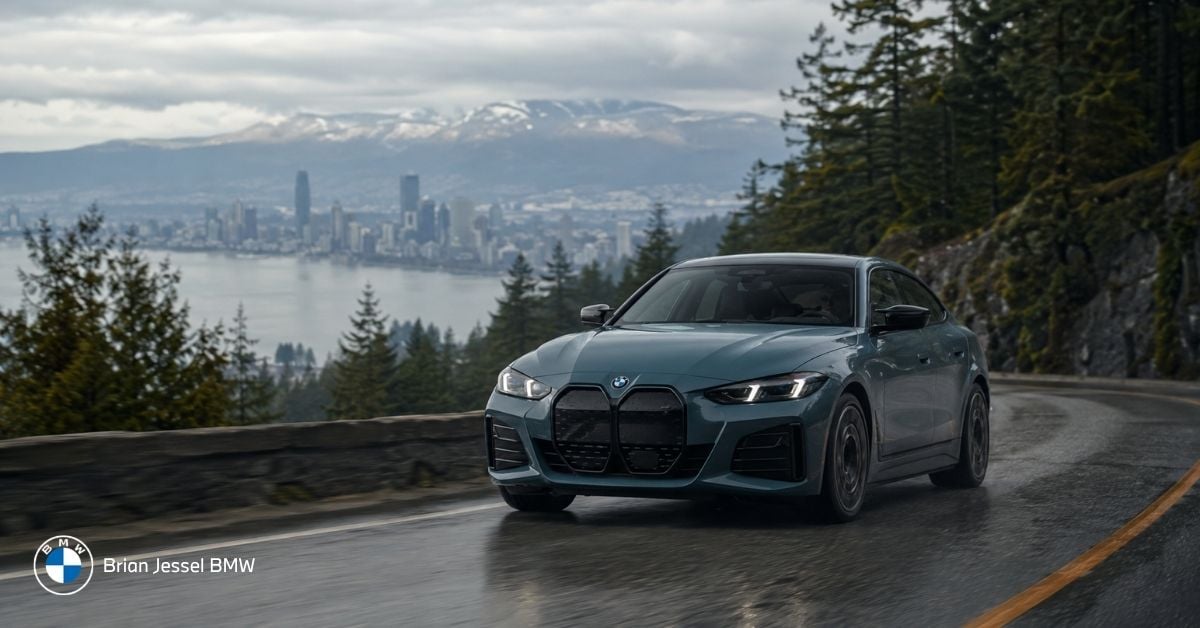
Experience BMW Regenerative Braking in Vancouver
Reading about B Mode and Adaptive recuperation is useful, but the difference is easiest to understand from behind the wheel. A test drive can show how each setting changes lift-off deceleration, coasting behaviour and brake-pedal use during everyday Lower Mainland driving.
Visit Brian Jessel BMW at 2311 Boundary Road in Vancouver to compare available BMW EV models and their regenerative braking settings. The team can explain how B Mode, D-Adaptive and selectable recuperation levels behave in the specific model you are considering, particularly if your regular routes include Coquitlam, North Vancouver, West Vancouver or other areas with frequent elevation changes.
Schedule an EV test drive or consultation with Brian Jessel BMW to experience BMW regenerative braking firsthand and find the setup that best suits your daily driving.
Frequently Asked Questions: BMW Regenerative Braking System
1. How does the BMW regenerative braking system work when driving downhill?
The electric motor acts as a generator during deceleration, converting kinetic energy into electricity for the high-voltage battery while helping slow the vehicle.
2. Why is my BMW’s regenerative braking limited when the battery is fully charged?
A fully charged battery cannot accept more recovered energy, so the i4 may use its conventional brakes to maintain expected deceleration.
3. Does BMW regenerative braking turn on the brake lights when I lift my foot off the pedal?
On the 2025 BMW i4, the brake lights can activate during sufficiently strong regenerative deceleration, depending on the degree of slowing.
4. Which mode is more efficient for mountain driving: BMW B Mode or D-Adaptive?
Neither mode is always more efficient. D-Adaptive varies between coasting and recuperation, while B provides stronger, more consistent one-pedal deceleration.
5. Do BMW electric vehicles still require traditional brake service in Vancouver?
Yes. Regenerative braking reduces wear, but pads, discs, brake fluid and other braking components still require regular inspection and service.
Source:
- BMW Group PressClub Canada — The New 2022 BMW i4 eDrive40 and i4 M50
- BMW Canada — Electric Car Battery and Drive Technology
- BMW Canada — The Benefits and Impact of Electric Cars
- City of Coquitlam — Westwood Plateau Community Profile
- City of Coquitlam — Coquitlam Crunch Trail
- Grouse Mountain — Getting Here & Parking
- Cypress Mountain — Getting Here
- Cypress Mountain — Trail Maps & Stats
- BMW Group PressClub Canada — BMW iX xDrive50: Fifth-Generation BMW eDrive
- BMW Group PressClub Canada — The New BMW 7 Series / BMW i7
- Province of British Columbia — Winter Driving
- BMW Canada — Electric Car Cost Overview
- BMW Canada — BMW Service Inclusive