EV Charging Stations Vancouver: How BMW Drivers Can Charge Across the City
EV Charging Stations Vancouver: How BMW Drivers Can Charge Across the City
Posted on February 1, 2026
Vancouver is one of Canada’s most EV-friendly cities, supported by municipal investment, provincial incentives, and a growing network of public charging stations. As electric vehicle adoption continues to rise, access to reliable, well-placed charging infrastructure has become a practical part of daily driving.
Drivers who own an EV expect charging to be predictable, available, and efficient. In Vancouver, that expectation is largely met, but charging options vary by location, speed, and intended use. Knowing where to charge, what type of charger to use, and how different networks operate can make a meaningful difference in everyday convenience and long-distance planning.
This guide explains how EV charging stations work across Vancouver, where the most useful charging locations are found, and how BMW electric vehicles fit into the city’s charging landscape. From Level 2 charging during daily errands to fast-charging options for regional travel, the sections below provide clear, practical guidance for BMW EV drivers navigating Vancouver and the surrounding region.
Best EV Charging Stations in Vancouver
Public EV charging in Vancouver falls into several categories that match different usage profiles. Some support fast charging for short stops, while others are designed for longer parking periods.
Vancouver also benefits from more than one thousand Level 2 ports and more than one hundred Level 3 DC fast-charging ports within a fifteen-kilometre radius of the city core.
Approximately 43%1 of public charging ports in the region offer free charging. The following groups reflect how drivers generally use available infrastructure.
Public Fast Charging Locations in Vancouver
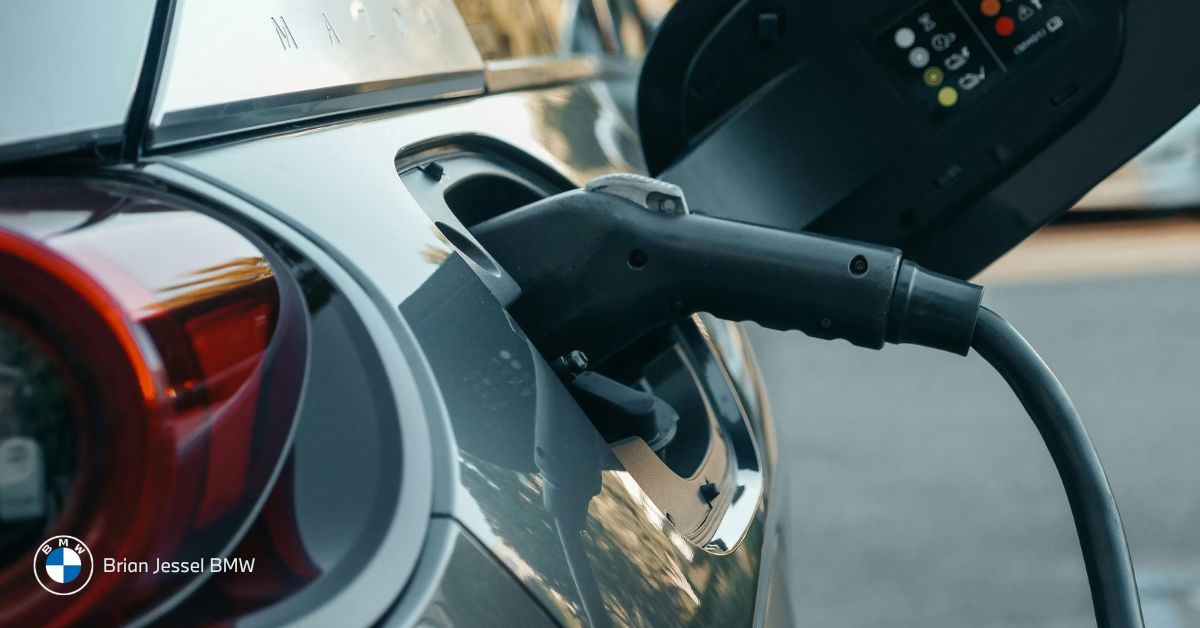
Fast-charging sites (DCFC) are positioned where turnover is important and where drivers cannot install chargers at home. They are commonly found at:
- Major medical facilities
- Canadian Tire sites equipped with CCS/CHAdeMO stalls
- Retail parking lots with FLO or Shell Recharge hardware
- Utility-backed highway locations
- Select municipal curbside locations
Fast chargers are useful for apartment and condo residents who lack assigned parking or personal charging equipment. They also support commuters who need a short charging stop between longer highway stretches.
Public fast-charging hubs are a priority for the City of Vancouver, which intends to have one located within a ten-minute drive of most neighbourhoods.
These sites offer DC fast charging (CCS + CHAdeMO) suitable for quick top-ups while running errands or beginning road trips. Representative examples include:
- BC Hydro – Vancouver Grandview Hwy Superstore — 3980 Grandview Hwy, Vancouver, BC V5M 2E9 (Public DCFC, CCS+CHAdeMO)
- VCH – GF Strong – DCFC — 4255 Laurel St, Vancouver, BC V5Z 3G9 (50 kW fast chargers)
- VCH – Vancouver General Hospital – DCFC — 899 W 12th Ave, Vancouver, BC V5Z 1M9 (50 kW fast chargers)
- Petro-Canada EV Fast Charger — 1743 Burrard St, Vancouver, BC V6J 3A6 (Multiple DCFC ports)
- Kingsway Honda (Dealer Fast Charger) — 368 Kingsway, Vancouver, BC V5T 3K2 (Public DC fast charging; availability may vary)
Note: These chargers are good for top-ups of range while shopping or between longer trips; performance may vary by network and time of day.
EV Charging Stations in Vancouver Shopping Centres and Malls
Charging while shopping remains a practical way to recover energy without adding time to a schedule. In Vancouver, large retail locations frequently allocate Level 2 chargers in underground or multi-level parking facilities. These sites are well suited to mid-length stops of one to three hours.
Tesla destination chargers are also common in commercial parking structures around the downtown core, though non-Tesla EVs generally need an adapter to use them.
Level 2 and some DCFC stations are located in retail parking areas, great for routine errands or lunch stops. Representative examples include:
- BC Hydro – Vancouver Grandview Hwy Superstore — 3980 Grandview Hwy, Vancouver, BC V5M 2E9 (Level 2 + DCFC; listed above under fast charging)
- BC Hydro – Kerrisdale — 5575 West Boulevard, Vancouver, BC V6M 3W6 (Multiple chargers)
Note: Many mall chargers aren’t DCFC but support Level 2 charging, which adds useful range during multi-hour visits.
Street and Curbside EV Charging Stations in Vancouver
Vancouver offers curbside charging in mixed-use residential and commercial corridors. These chargers supply power for drivers who park on the street, especially downtown renters who do not have home chargers.
Curbside charging helps reduce congestion at fast-charging hubs and increases the convenience of running an EV without a personal garage. Curbside sites are usually Level 2, positioned for overnight or multi-hour use, and governed by posted parking rules.
Public curbside Level 2 charging helps drivers without home chargers (especially in dense neighbourhoods). Representative examples include:
- City of Vancouver Curbside (Yukon St) — 2710 Yukon St, Vancouver, BC V5Y 2B9 (Primarily Level 2; limited DC fast charging nearby)
- City of Vancouver – 646 E 44th Ave — 646 E 44th Ave, Vancouver, BC V5W 1G9 (Level 2 with nearby DC fast charging access)
- On the Run EV Fast Charge — 4615 Arbutus St, Vancouver, BC V6M 4A6 (Public fast charging)
Note: Street and curbside stations often have posted parking time limits; always check signage.
EV Charging at Parks, Tourist Spots and Recreation Centres
Public charging infrastructure is deliberately placed near destinations such as VanDusen Botanical Garden, Granville Island, community recreation centres, and civic attractions. These sites allow residents and visitors to combine leisure time with charging.
This arrangement is suitable for weekend trips, school holidays, and short regional excursions. Many of these chargers are Level 2, allowing a vehicle to gain meaningful charge during a museum visit, a garden walk, or an afternoon at the pool.
Representative examples include charger clusters rather than single fixed stations:
- Science World British Columbia — 1455 Quebec St, Vancouver, BC V6A 4L7 (Level 2)
- Park King EV chargers (various parks/rec centres) — Subject to municipal installation; check ChargeHub for exact stalls
- BC Hydro stations near Stanley Park and Vanier Park areas — Check PlugShare for current stalls
Note: Amenities like washrooms and picnic spaces often accompany charging zones near parks.
Charging Stations Along Major Vancouver and BC Road-Trip Routes
Many Vancouver drivers require highway-ready infrastructure because regional travel is common. Popular travel corridors include:
- The Sea-to-Sky route to Squamish and Whistler
- Highway 1 east through Hope, the Fraser Valley, and toward the Okanagan
- Ferry-linked routes to Vancouver Island
Representative examples of fast chargers that support regional travel from Vancouver and adjacent Lower Mainland corridors include:
- BC Hydro – North Vancouver Fast Chargers — 140 1st St E, North Vancouver, BC V7L 1B1 (DC fast)
- BC Hydro EV – BCIT Burnaby Campus Hub — 3700 Willingdon Ave, Burnaby, BC V5G 3H2 (High-power DC fast chargers; peak output varies by stall and vehicle capability)
These are ideal mid-trip stops on the Sea-to-Sky Corridor and routes toward the interior of BC.
BC Hydro fast chargers, Petro-Canada and Electrify Canada stations, and Shell Recharge locations contribute to this network. Most long-distance sites provide CCS and CHAdeMO access, and many newer installations supply higher peak outputs suitable for modern EV batteries.
This combination allows BMW EV owners to complete regional travel without significant scheduling changes.
Drivers can confirm locations through PlugShare, ChargeHub, BC Hydro EV, or retailer-specific parking information.
How EV Charging Works in Vancouver
Vancouver drivers typically encounter two charging categories:
Level 2 charging, found at shopping centres, recreation facilities, curbside stalls, hotels, and private parking lots. These stations support several kilowatts of power and suit parked vehicles.
DC fast charging, found at highway locations, select retail hubs, and high-traffic urban sites. These stations can add range quickly and are usually priced higher than Level 2 charging.
Common EV networks in Vancouver include BC Hydro EV, FLO, ChargePoint, Blink, Hypercharge, and several retail or utility networks. Account registration is normally required to start a session, either through a mobile application or an RFID card.
Vancouver’s supply of public Level 2 ports, combined with a growing supply of DCFC locations, makes EV ownership practical even in multi-family dwellings.
BMW Electric Car Charging in Vancouver
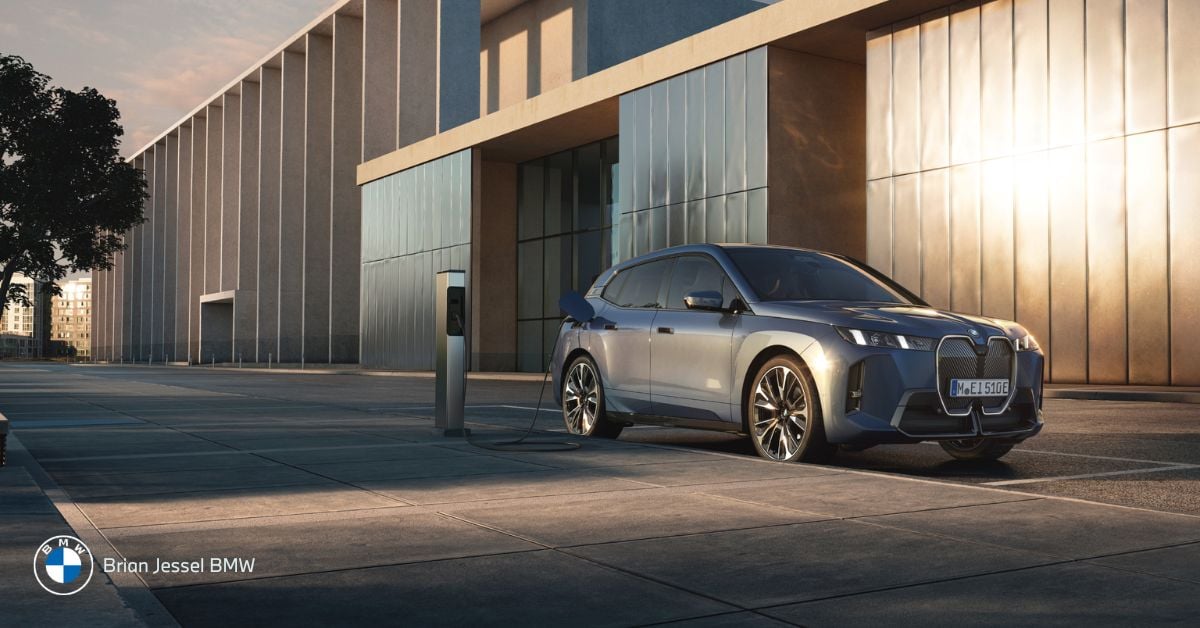
BMW battery-electric models, including the i4, i7, and iX, are equipped for AC and DC charging through CCS connectors in Canada. This allows BMW drivers to use most public fast-charging networks in Vancouver, including BC Hydro EV, FLO, and private highway providers. For slower charging, BMW models use the standard J1772 inlet on Level 2 equipment.2
BMW in-car navigation displays compatible charging stops and updates availability where network data is supplied. Because Vancouver’s charging capacity ranges from low-kilowatt Level 2 posts to high-output DCFC sites above 150 kW, BMW drivers can match charging output to vehicle capability. This applies to daily travel, weekend distances, and long-distance cross-province trips.3
If you drive a BMW iX and want model-specific charging details, see Your Complete BMW iX Charging Guide from Brian Jessel BMW.
How to Choose the Right EV Charging Station in Vancouver
Charging selection depends on lifestyle rather than a single “best” option. Typical categories include:
- Daily commuting: Level 2 chargers at workplaces, malls, and recreation centres offer measured charging without extra errands.
- Apartment living: Public fast chargers fill the gap for residents without home equipment.
- Road trips: Highway DC fast chargers allow battery replenishment at service stops; plan for a short stop every few hours depending on range.
- BMW EV owners: In-car navigation identifies BMW-approved CCS stations and confirms battery pre-conditioning when heading to fast-charging sites.
A combination of choices usually produces a predictable routine, with Level 2 for parked time and DCFC reserved for active travel.
Vancouver Charging Costs, Parking Rules, and What to Expect
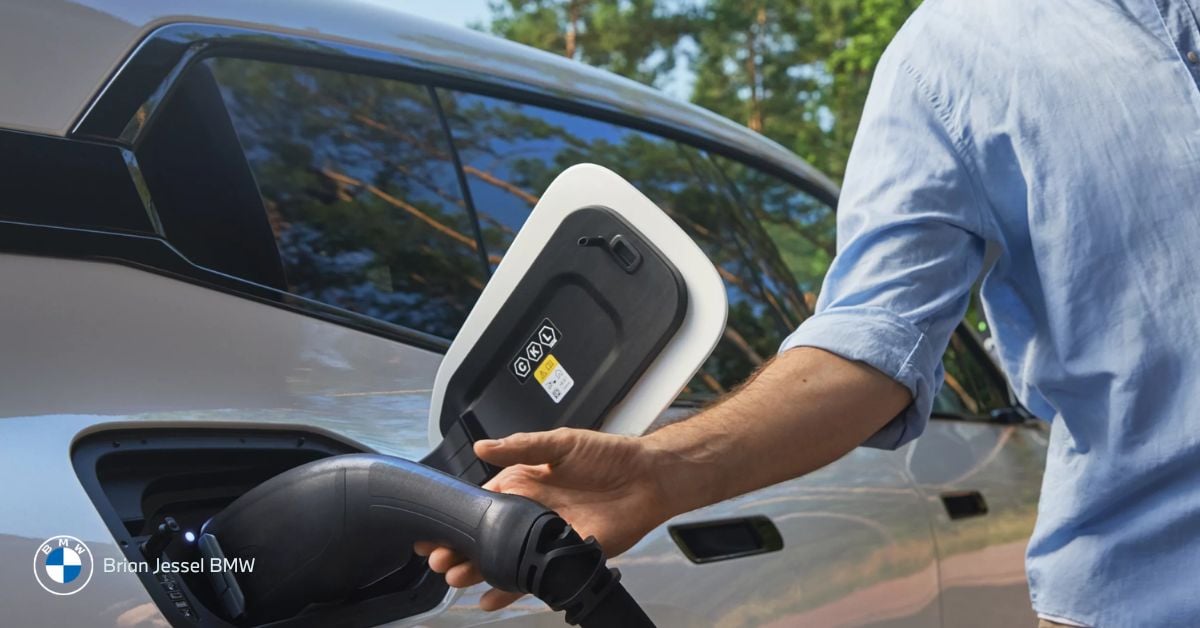
The city structures pricing at public EV chargers to encourage turnover and preserve access for drivers who need an active charge. Charges are based on kilowatt-hour consumption rather than time. This approach ensures drivers pay for the electricity delivered rather than the minutes spent plugged in.
For 2026, published municipal rates at City-owned stations are:
- Level 2 charging: $0.2972/kWh
- Level 3 DC fast charging: $0.3609/kWh, plus a $0.40-per-minute idling fee after a five-minute grace period once charging ends 4
Parking fees are separate. A driver using a charger in a paid parking zone must still pay for parking under posted requirements. Curbside stalls follow time limits where posted. Downtown areas may apply parking tariffs even where electricity is priced separately.
Weather affects charging speed more than access. Heavy rain does not block charging activity, although winter temperatures may slow charging while battery conditioning stabilizes the pack.
Tips for BMW EV Drivers Using EV Charging Stations in Vancouver
BMW drivers can improve charging predictability with several habits:
- Charge earlier in the day or later in the evening to avoid peak station demand.
- Use BMW route planning to find stations within a comfortable State of Charge.
- Enable battery pre-conditioning before fast charging to reduce charging time.
- Favour well-reviewed public chargers to reduce the chance of blocked or out-of-service hardware.
- Limit fast-charging sessions once the battery reaches approximately eighty per cent to avoid reduced charging speeds.
Conclusion
Vancouver’s public charging supply is strong. Highway fast-charging corridors support regional travel. Government programmes continue to expand infrastructure. This combination makes the region practical for EV owners.
BMW electric vehicles accept both Level 2 and DC fast charging. They match Vancouver’s CCS-based fast-charging network for rapid sessions. They also charge reliably on Level 2 stalls at everyday destinations.
For BMW drivers seeking model choice, range planning, and charging instruction, Brian Jessel BMW can provide guidance on how each model performs in Vancouver traffic and throughout British Columbia.
FAQs
1. Are EV charging stations easy to find in Vancouver?
Yes. There are more than one thousand Level 2 charging ports and more than one hundred fast-charging ports within fifteen kilometres of the city.5
2. How fast are Vancouver’s public chargers?
Level 2 stations typically offer several kilowatts suited to parked vehicles. Fast-charging stations range from about 25 kW to more than 150 kW depending on the provider.
3. Can BMW electric vehicles use all public EV chargers?
BMW EVs can use J1772 Level 2 chargers and CCS fast chargers. Tesla-specific connectors require an adapter.
4. Do malls in Vancouver have EV charging stations?
Yes. Many shopping centres and parking structures supply Level 2 stalls for retail customers.
5. Are there enough fast chargers for Vancouver road trips?
Yes. Public fast chargers are found on the Sea-to-Sky corridor, Highway 1 eastward, and routes linked by BC Ferries.
6. How reliable are charging stations in rainy weather?
Rain does not prevent charging, though colder temperatures may extend charging times.
7. Are there free EV charging stations in Vancouver?
Yes. About 43% of public charging ports within fifteen kilometres of Vancouver are free to use.
8. What is the 80% rule for EV charging?
Charging slows once a battery approaches 80%. Many drivers use fast chargers up to that point and complete charging later on Level 2.
9. Is it okay to charge my EV every day?
Yes. Daily charging through Level 2 equipment is standard practice and supports stable battery operation.