Your Complete BMW iX Charging Guide from Brian Jessel BMW
Your Complete BMW iX Charging Guide from Brian Jessel BMW
Posted on December 16, 2025
The BMW iX is designed to make electric driving simple. With a large battery, flexible charging options, and built-in tools that manage energy intelligently, the iX can fit smoothly into your daily life, whether you’re commuting through Vancouver, planning weekend trips to Whistler, or relying on overnight charging at home.
This guide walks you through every practical part of charging your iX: home setup, public charging, fast charging, charging settings, battery health, cost estimation, and Vancouver-specific tips.
Everything is written for real owners, in real daily use.
Keep Reading: 2026 BMW IX Reviews and Specs
How to Charge Your BMW iX
Charging the BMW iX is designed to be straightforward, whether you prefer plugging in at home or relying on Vancouver’s public charging network. The iX supports both Level 2 home charging and DC fast charging, giving you flexibility based on your routine and driving habits.
Home Charging (Level 2)
For most iX owners, home charging becomes the core of daily use. A Level 2 charger uses a 240-volt circuit and provides far quicker charging than a standard household outlet. Plug in when you get home, and the iX will usually be fully charged by morning.
Installing a Level 2 charger requires a licensed electrician. They assess your panel, choose the best mounting spot, and ensure everything meets BC electrical codes. Once installed, charging becomes automatic: the iX manages intake speed, battery temperature, and displays progress on iDrive and the MyBMW app.
Home charging is also the most cost-efficient option. BC Hydro rates make overnight charging affordable, especially when using scheduled charging during off-peak hours.
Public Charging
Public charging is a helpful backup for condo residents, weekend travellers, or anyone without home charging. The iX can use public Level 2 chargers located at malls, community centres, office buildings, and most major parking facilities.
Level 2 public chargers deliver a steady, slower charge that works well when you plan to stay parked for a few hours (during shopping, dining, or work). These stations expand your flexibility across Vancouver and the Lower Mainland.
For faster top-ups, the iX supports DC fast charging at networks like BC Hydro, FLO, ChargePoint, and Shell Recharge. These stations can add significant range in a short stop, making them ideal for longer trips to places like Whistler or the Okanagan.
The MyBMW App makes public charging easier by locating compatible stations, checking real-time availability, and guiding you to chargers that use the CCS connector. For many Vancouver drivers, especially those in condos, public charging blends naturally with daily routines.
EV Charging Stations in Vancouver
Vancouver offers one of the most developed public charging networks in Canada, making it easy to keep your BMW iX charged even if you don’t have access to home charging. The city’s mix of Level 2 chargers and DC fast chargers supports everything from quick top-ups to longer charging sessions while you shop, work, or run errands.
BC Hydro Fast Chargers
BC Hydro operates a growing network of DC fast-charging stations across the Lower Mainland. These locations are designed for quick sessions, often reducing charging stops to under an hour. You’ll find them near major arteries such as Highway 1, Lougheed Highway, Kingsway, and the Sea-to-Sky corridor.
These stations work especially well for drivers who take frequent trips to Burnaby, Coquitlam, Surrey, or North Vancouver. Most BC Hydro fast chargers support CCS connectors, so iX owners can plug in without adapters.
FLO, ChargePoint & Shell Recharge
Vancouver’s everyday charging backbone is built on networks like FLO, ChargePoint, and Shell Recharge. These stations are widely available in mall parking lots, office complexes, public libraries, hospitals, and community centres.
Level 2 chargers from these networks are ideal when you plan to stay parked for a longer period. They support routine top-ups during grocery runs, workdays, or evenings out in neighbourhoods like Kitsilano, Yaletown, Mount Pleasant, and Metrotown. Many sites also offer DC fast chargers for quicker sessions.
Condo & Apartment Charging
Many Vancouver drivers rely on shared charging access in strata buildings. Some condos now include Level 2 chargers in assigned stalls, while others offer shared stations managed through booking apps or RFID systems.
If your building has no chargers, installation is often possible through strata approval. Programs like BC Hydro’s EV Ready rebates have encouraged more buildings to add EV infrastructure. The BMW iX works seamlessly with most shared chargers, making condo living EV-friendly once access is secured.
BMW-Affiliated Chargers
BMW partners with several charging providers across Canada, giving iX drivers access to streamlined charging and exclusive benefits depending on the station. Through the MyBMW App, owners can locate BMW-affiliated chargers, check availability, and start sessions directly from the app.
These locations are often well-placed along major corridors and in premium retail or commercial areas. BMW-aligned stations ensure reliable charging whenever you’re travelling around Vancouver or heading out of the city.
Explore BMW Electric Cars

Charging Your BMW iX at Home: A Step-by-Step Guide
Charging your BMW iX at home is the most convenient and cost-efficient way to keep your EV ready for daily driving. Most owners rely on overnight charging so the iX starts each morning with a full battery and no need for public stations. Below is a simple, practical walkthrough of how to set up and use home charging effectively.
1. Select the Right Home Charger
The BMW iX is designed to work best with a Level 2 home charger, which uses a 240-volt outlet to deliver much faster charging than a standard household plug. A Level 2 unit allows you to recharge the iX overnight, making it ideal for daily commuting and weekend plans.
When choosing a charger, look for reputable brands that support consistent output and smart-charging features. BMW also offers branded options that integrate seamlessly with the MyBMW app, giving you more control over scheduling and monitoring your sessions.
2. Arrange Professional Installation
Once you’ve selected your charger, the next step is installation. A licensed electrician will ensure the outlet, wiring, and breaker panel are properly configured for EV charging. Most homeowners install the charger in a garage or carport where the vehicle naturally parks.
This setup usually takes just a few hours and creates a permanent, reliable charging point. If you live in a condo, strata approval may be required, but many buildings are now EV-ready and already support Level 2 installations.
3. Plug In and Start Charging
After installation, charging your iX becomes as simple as parking and connecting the cable to the vehicle’s charging port. The iX automatically begins charging as soon as it detects power, and the dashboard shows the estimated charging time and battery status.
Many owners schedule charging during overnight off-peak hours to reduce costs. These settings can be adjusted through the iDrive system or the MyBMW app, allowing you to create a charging routine that fits your lifestyle.
BMW iX Charging Port Location & Cable Use
Understanding where the charging port is located and which cables your BMW iX uses makes daily charging straightforward and stress-free. BMW designed the iX with an intuitive setup that works seamlessly at home, at work, and across public charging networks.
Charging Port Location
The charging port is on the passenger-side rear quarter (right rear). This placement keeps the cable clear of foot traffic and makes it easy to access whether you’re parked in a garage, driveway, or public charging stall.
Because the port sits higher than on many EVs, plugging in requires minimal bending and is convenient even in tight parking spaces. Visibility around the port is also good at night thanks to built-in lighting that activates when the flap opens.
Compatible Charging Cables
For home charging, the iX works with a Level 2 cable connected to a 240-volt wall charger or to BMW’s portable charging unit. This setup offers the best balance between speed and convenience, allowing most owners to fully recharge overnight.
For public fast charging, the iX uses the CCS (Combined Charging System) connector, which is the standard across Canada. This means you can plug into nearly any DC fast-charging station, including BC Hydro, FLO, ChargePoint, and Shell Recharge, without needing an adapter.
How the Cable Connects
Once you plug the cable into the port, the iX automatically locks the connector in place and begins charging. The system confirms the connection on the dashboard and through the charging-ring indicator around the port. When charging finishes or you unlock the vehicle, the connector releases so you can unplug safely.
This simple, guided process makes the iX approachable even for first-time EV owners while ensuring compatibility across all major charging networks.
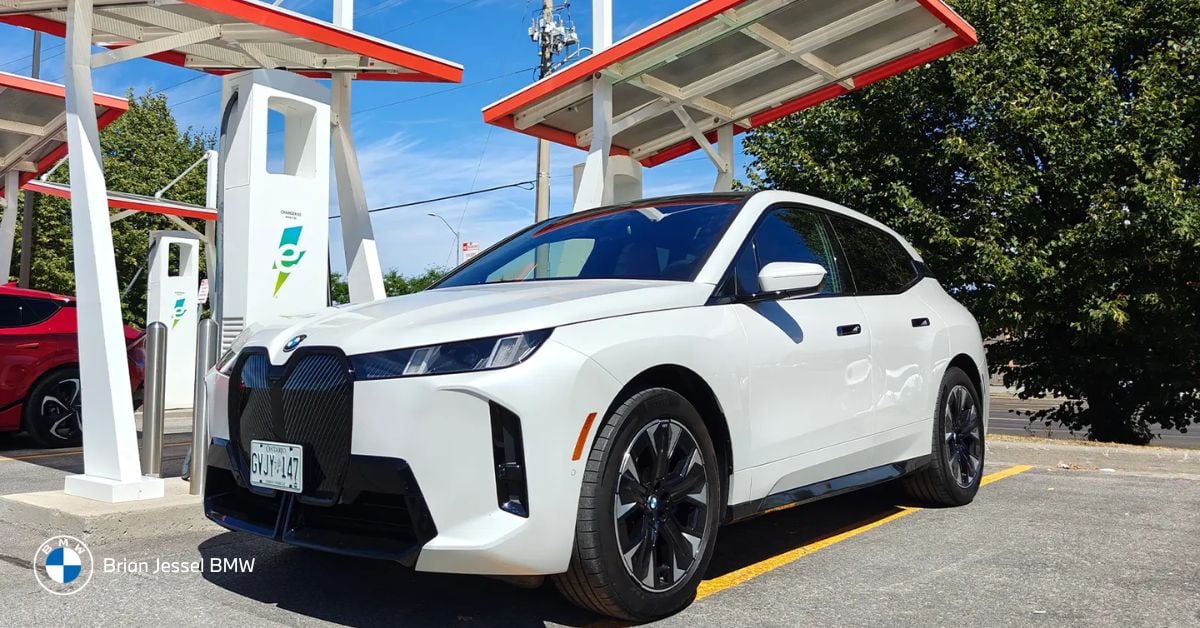
BMW iX Charging Speed (kW)
Charging speed determines how quickly your BMW iX can recover range, and the experience differs depending on whether you’re using home Level 2 charging or a public DC fast charger. The iX supports both, giving you flexibility no matter where you drive in Vancouver.
Level 2 Charging at Home
Level 2 charging uses a 240-volt outlet (similar to a clothes dryer connection) to provide a steady, reliable charge while you sleep. Most iX models can fully recharge overnight, making home charging the most practical option for daily drivers.
Because charging happens at a consistent rate, your iX is always ready each morning without needing public stations for routine use.
DC Fast Charging on the Go
Public DC fast chargers offer significantly higher power, allowing the iX to charge much faster than at home. When using these high-output stations, the iX can recover most of its battery (typically from 10% to 80%) in well under an hour.
This makes fast charging ideal for long road trips, weekend drives to Whistler, or quick top-ups during busier days when you don’t have time for a full home charge.
Why Charging Speed Varies
Your exact charging speed depends on several real-world conditions. Battery temperature, the charger’s power output, and your current state of charge all play a role.
Cold Vancouver mornings, for example, may slow charging slightly until the battery warms up, while high-power stations deliver faster results whenever they’re available.
How the iX Manages Charging
The BMW iX continuously monitors charging conditions to protect battery health. As the battery approaches higher charge levels, the system gradually reduces speed to preserve longevity.
This is why fast chargers deliver their highest speeds when the battery is low, making them ideal for short, efficient sessions instead of full charges.
Learn more: BMW iX vs Audi Q6 e tron
Estimating Charging Costs Based on kWh
Understanding charging costs helps BMW iX owners plan their energy use and get the most value out of daily driving. Because EVs charge based on electricity consumption rather than time, the key factor is the price per kilowatt-hour (kWh) from your provider.
How Charging Costs Are Calculated
Electricity billing in BC is straightforward: you pay for the amount of energy your iX draws. A full charge simply multiplies your battery size by the local kWh rate. This makes home charging predictable, with very little fluctuation from day to day.
In most cases, charging an iX at home costs far less than refueling a gas vehicle, especially for Vancouver commuters.
Understanding BC Hydro Residential Rates
BC Hydro uses a tiered rate structure. Most households fall within Tier 1 for everyday charging, while heavier usage may touch Tier 2. Rates remain among the lowest in Canada, which keeps EV ownership economical.
Because many iX drivers charge overnight, it’s easy to stay within lower-cost tiers while avoiding peak daytime energy use.
Home Charging Cost Examples
A typical full charge for an iX battery usually amounts to somewhere between $12 and $16, depending on the model and your electricity tier. This covers an entire battery cycle—more than enough for most Vancouver commutes and weekend plans.
Compared to fueling a similar-size gas SUV, the cost savings quickly add up, making home charging the most affordable long-term strategy.
Public Charging Costs in Vancouver
Public charging stations in BC price energy differently. BC Hydro fast chargers are billed per kWh at a higher rate than home charging because they deliver significantly more power.
Fast charging remains ideal for convenience but should complement—not replace—your routine home charging habits if you want to keep costs low.
Tips for Reducing Charging Costs
Small adjustments can lower your monthly charging expenses. Charging overnight at home, maintaining moderate battery levels, and avoiding unnecessary fast-charging sessions all help minimize costs.
Using tools like the My BMW app to schedule charging during low-demand periods can also help keep your electricity spending predictable and efficient.
Learn more: BMW IX Cost in Vancouver
BMW iX Fast Charging Explained
Fast charging is one of the most convenient ways to add range to your BMW iX, especially during longer trips or busy days when you can’t wait for a full home charge. The iX is built with high-capacity DC fast-charging capability, allowing it to regain a large portion of its battery in a short, predictable time window.
At compatible DC fast-charging stations, the iX can charge from 10% to 80% in roughly half an hour, depending on the trim. This makes it easy to top up during errands, coffee breaks, or rest stops when traveling outside Vancouver.
The vehicle automatically manages battery temperature and charging efficiency as soon as it is connected to a DC fast charger. This helps maintain stable performance, even when charging in colder weather or after extended highway driving. The system is designed to protect battery health, ensuring fast charging remains both quick and reliable over the long term.
Fast charging is especially useful for Vancouver-area drivers who frequently use highway routes or take weekend trips. Whether you’re heading toward Squamish, Kelowna, or the Coquihalla, the ability to regain significant range quickly helps reduce range anxiety and keeps travel schedules flexible.
Factors Affecting Fast Charging Time
Several factors influence how quickly your BMW iX can charge at a DC fast-charging station. These conditions vary from session to session, so charging times may differ even when using the same charger.
Battery Temperature
Batteries charge fastest when they’re within an optimal temperature range. On cold winter mornings or after the vehicle has been parked outside overnight, the iX may take slightly longer to reach peak charging speed. Its built-in thermal management system works to warm or cool the battery automatically, but these adjustments can affect the initial charging rate.
State of Charge (SOC)
Fast charging is designed to work most efficiently between roughly 10% and 80% battery. As the battery approaches higher levels, charging naturally slows to protect long-term health. This is why many drivers prefer quick top-ups rather than charging to 100% during everyday use.
Charger Power Output
Not all DC fast chargers deliver the same amount of power. Some public stations may offer lower kW levels, leading to slower charging speeds even when the vehicle supports faster rates. Checking the power rating on apps like PlugShare, BC Hydro EV, or FLO helps ensure you select the most efficient stations.
Weather Conditions
Extreme heat or cold has a direct impact on charging performance. In colder climates, especially in areas like North Vancouver, Burnaby Mountain, or Whistler, charging sessions may begin more slowly until the battery reaches an ideal temperature range.
Battery Health Over Time
Normal battery aging can also influence charging performance. While the iX is designed to maintain strong long-term battery health, older batteries may not charge as rapidly as new ones. Regular software updates and healthy charging habits help maintain optimal performance.
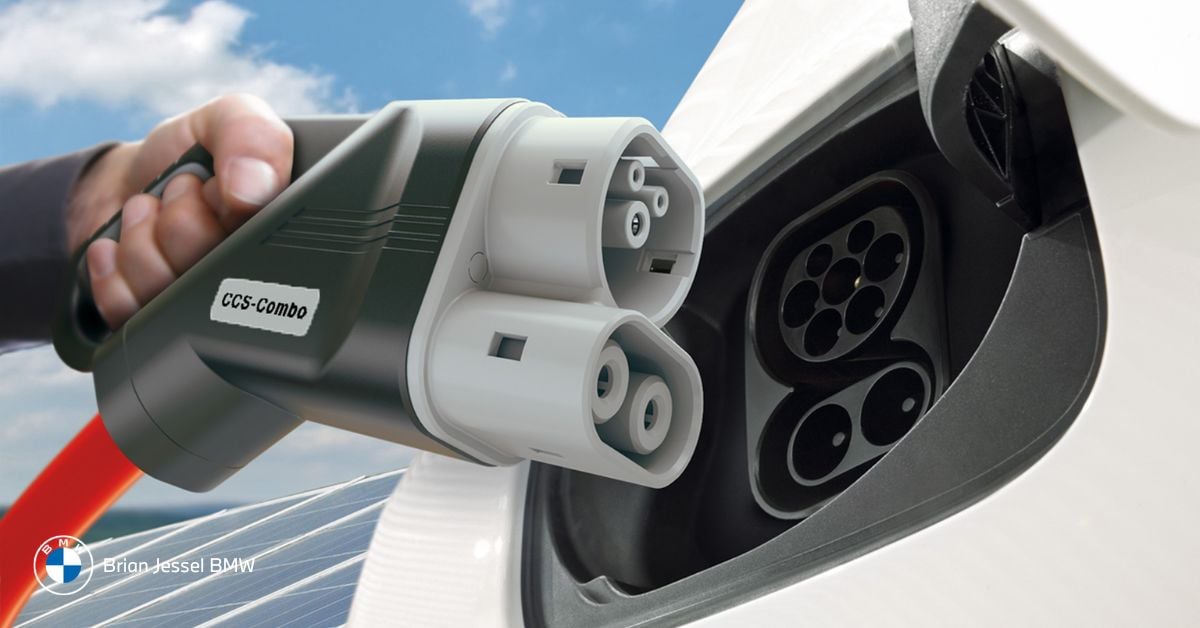
Understanding the BMW iX Charger Type
The BMW iX uses the Combined Charging System (CCS), a connector standard that supports both regular Level 2 charging and high-power DC fast charging. This means you can use a single charge port for every type of charger you encounter, whether at home, work, or public stations around Vancouver. The CCS connector combines the familiar J1772 AC plug with two additional pins below it that enable rapid DC charging.
For home and workplace charging, the iX relies on the J1772 portion of the CCS connector. This is the same type of plug used by most Level 2 chargers in North America, making the iX compatible with the majority of home charging stations. It also works seamlessly with BMW’s portable Level 2 charging cable when connected to a 240-volt outlet such as a NEMA 14-50.
When you visit a public fast-charging station, the iX switches to the full CCS configuration. BC Hydro, FLO, ChargePoint, and Shell Recharge all support CCS, allowing the iX to use high-power DC chargers across the Lower Mainland and beyond. These stations deliver significantly higher charging speeds, making them ideal for road trips or quick top-ups.
Because CCS has become the standard for most new EVs in Canada, BMW iX owners benefit from widespread compatibility without needing special adapters. Tesla Superchargers are gradually opening to CCS vehicles in selected regions; where supported, the iX can use these stations as well, though in some locations an adapter may still be required.
Customizing BMW iX Charging Settings
The BMW iX gives drivers a high level of control over how and when the vehicle charges. These settings are accessed through the iDrive system or the My BMW app, allowing you to tailor charging routines to match your daily habits, electricity rates, and long-term battery care priorities. This customization makes charging more efficient and helps manage overall energy use.
One of the most useful tools is scheduled charging, which lets you choose the hours when the iX should draw power. Many Vancouver drivers set charging to begin overnight during off-peak electricity periods, allowing the vehicle to start each morning with a full battery at a lower cost. You can set a departure time as well, so the iX warms or cools the cabin using wall power instead of battery energy.
You can also select a charging limit, which determines how much the battery will charge during everyday use. BMW recommends keeping the charge level between 10% and 80% for daily driving to support long-term battery health. Raising the limit to 100% is easy when preparing for longer trips, such as drives to Whistler or the Okanagan.
Temperature-related features are another important part of the charging menu. The iX can precondition its battery before fast charging, which helps maintain better speeds during cold weather. This feature activates automatically when you set a charger as a destination in the navigation system, making winter fast-charging sessions more consistent.
The charging settings also allow you to monitor energy usage in real time. You can view charging speed, estimated completion times, and recent sessions directly on the main display. The My BMW app mirrors these tools, letting you check progress or adjust preferences even when you’re away from the vehicle.
Together, these charging options help BMW iX owners build predictable, efficient routines. By setting schedules, managing battery limits, and using preconditioning, drivers get a smoother and more cost-effective charging experience every day.
How to Check BMW iX Battery Health
The BMW iX includes several built-in tools that make monitoring battery health simple and user-friendly. Most owners rely on the information displayed directly in the iDrive system, which provides real-time insights into current charge levels, projected range, and energy consumption. These indicators help you understand how driving style, temperature, and terrain affect the battery day-to-day.
For deeper visibility, the My BMW app extends monitoring beyond the vehicle itself. The app shows charging history, estimated range, energy usage patterns, and any alerts related to the high-voltage system. It’s especially useful when planning longer trips or tracking how efficiently the battery performs throughout the week.
BMW also offers more advanced diagnostics through its service network. A certified BMW technician can run a detailed evaluation using factory tools that measure battery health, capacity retention, cell balance, and thermal performance. This type of check is typically done during scheduled maintenance or whenever the owner wants reassurance about long-term longevity.
Together, these tools give iX drivers a clear picture of battery condition, helping them maintain strong performance, anticipate service needs, and maximize long-term range reliability.
Tips for Maintaining a Healthy BMW iX Battery
- Keep daily charge between 10% and 80%. This reduces long-term battery stress. Save 100% charges for road trips and begin the trip soon after completing the charge.
- Avoid letting the battery drop below 10%. Extremely low levels force the system into protective modes and may reduce charging efficiency.
- Store the vehicle at 30%–50% for long idle periods. This range is gentler on the battery if the vehicle won’t be used for several days.
- Park in moderate temperatures when possible. Garages or shaded areas help avoid extreme heat or cold, both of which increase energy demands.
- Use smooth acceleration and braking. Gentle driving improves efficiency and reduces unnecessary strain on the battery.
- Minimize excess weight and aerodynamic drag. Removing roof boxes and unnecessary cargo lowers consumption and helps the battery operate more efficiently.
- Charge right before leaving on long trips. Avoid keeping the battery at 100% overnight.
- Let the vehicle manage battery temperature. The iX’s thermal management system works best when not overridden by extreme charging or driving conditions.
Conclusion
Charging the BMW iX is designed to be simple, flexible, and seamless for everyday life. Whether you’re topping up overnight at home, using BC Hydro fast chargers on trips, or adjusting settings through iDrive, the iX provides a charging experience that fits modern Vancouver living.
By setting up home charging, using public fast chargers when needed, and following healthy battery habits, you’ll enjoy maximum long-term performance, range, and convenience from your iX.
FAQ
1.How long does it take to fully charge my BMW iX?
Level 2 home charging typically takes several hours overnight, while DC fast charging can bring the battery from 10% to 80% in roughly half an hour. Actual times vary based on temperature and charger output.
2.Can I use a regular power outlet to charge my BMW iX?
You can, but it’s slow and not ideal for daily use. A Level 2 charger provides the speed and efficiency most iX owners need for reliable overnight charging.
3.Where can I find a DC fast charging station in Vancouver?
BC Hydro, FLO, ChargePoint, Shell Recharge, and the BMW Charging Network all operate fast chargers across Metro Vancouver. The My BMW app and in-car navigation show nearby locations in real time.
4.Do I need an adapter to charge my BMW iX at public stations?
No. The iX uses the CCS connector found at most public chargers in BC, so adapters are rarely required.
5.What type of plug does the BMW iX use?
For home charging, the iX uses the J1772 connector. For DC fast charging, it uses the CCS1 connector, which is standard across Canadian charging networks.
6.Can you charge a BMW iX with a Tesla charger?
Some Tesla Superchargers now support CCS vehicles, but access varies by location. In areas where CCS isn’t supported, an approved adapter may be required.
7.Should I always charge my EV to 100%?
No. Daily charging should stay between 10% and 80%, reserving 100% only for long trips. This helps preserve long-term battery health.
Explore Latest Models Here: 2026 BMW Cars, 2025 BMW Cars, BMW Gas Vehicles, BMW M Series for Sale, BMW Luxury Line for Sale, BMW Convertible, BMW Sedan, BMW SUVs, BMW Coupes, 2026 BMW ix, 2025 BMW 5 Series 530i xDrive, 2024 BMW X3 M40i xDrive, 2025 BMW i5