BMW Isetta: The "Bubble Car" That Saved a Legacy
BMW Isetta: The "Bubble Car" That Saved a Legacy
Posted on April 28, 2026
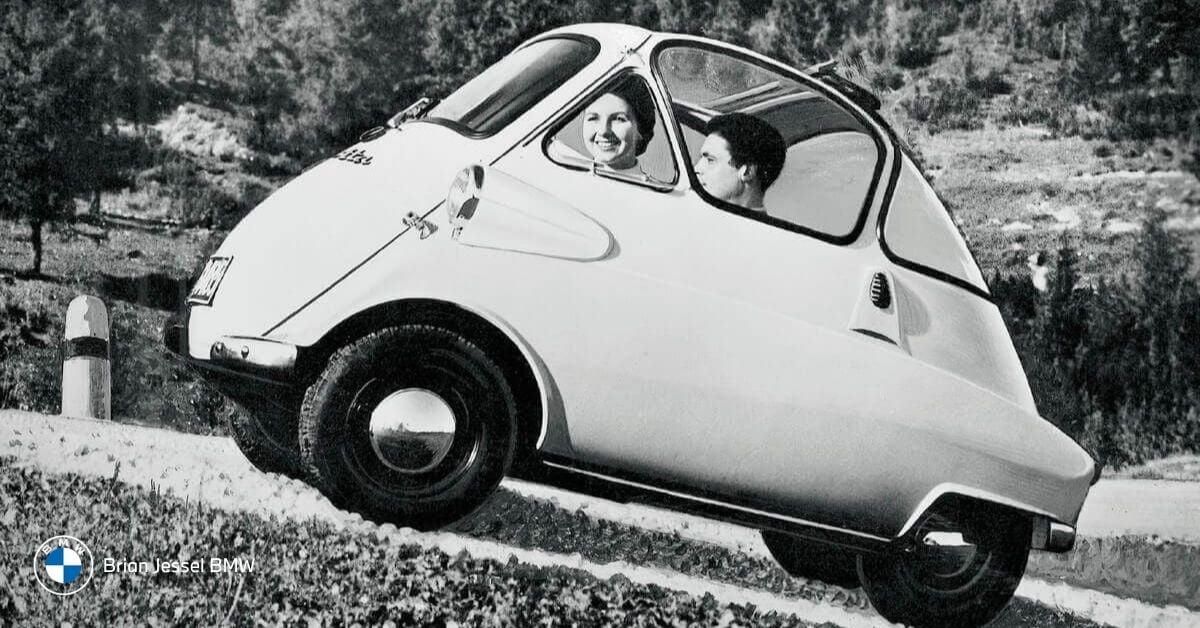
The BMW Isetta was a tiny, front-opening microcar built by BMW between 1955 and 1962. Nicknamed the “bubble car” for its rounded glass canopy and egg-like shape, it looked unlike anything else on European roads. With a single door at the front, motorcycle-based engineering, and seating for two, the Isetta stood at the opposite end of BMW’s range from its luxury sedans.
Yet this modest machine played an outsized role in BMW’s history. At a time when the company was close to financial collapse, the Isetta generated the production volume and cash flow that kept the factory lights on. Its success laid the groundwork for the cars that would later define BMW’s modern identity.
What Is the BMW Isetta?
The BMW Isetta is a microcar, a purpose-built, ultra-compact vehicle designed for short-distance urban transport in post-war Europe. In period terms it is often described as a motocoupe, meaning it sits somewhere between a motorcycle and a conventional car in size, power, and intent.
BMW produced the Isetta under licence from 1955 to 1962, after the car first appeared in Italy as an Iso product and made its public debut at the 1953 Turin Motor Show.
What type of vehicle was it?
The Isetta was not designed as a scaled-down “normal car.” Instead, it was engineered as a minimal footprint mobility solution for crowded streets and limited budgets. It prioritised low running costs, simple mechanics, and easy parking over speed or long-distance comfort. This is the core reason the Isetta became one of the most recognisable microcars of its era.
| Core Fact | Details |
| Production (BMW) | 1955–1962 |
| Original Debut | 1953 Turin Motor Show (As an Iso Product) |
| Seating | Two Adults, Side by Side |
| Engine (BMW 250/300) | Single-Cylinder, Four-Stroke Motorcycle-Derived Engine |
| Displacement | 247 cc (Isetta 250), Later 298 cc (Isetta 300) |
| Power Output | 12 hp (250) / 13 hp (300) |
| Top Speed | Approximately 85 km/h (53 mph) |
| Fuel Consumption | Approximately 3.0–4.0 L/100 km (60–75 mpg, Depending on Variant and Conditions) |
Why was it called a “Bubble Car”?
The nickname came from its rounded greenhouse. The wraparound glazing and domed roof gave it the appearance of a transparent bubble mounted on wheels. Large windows and a full-length fabric sunroof made the interior feel airy despite its small footprint.
Why it was different from traditional cars
The Isetta breaks from “traditional car” thinking in several fundamental ways:
- Entry and layout: A conventional car uses side doors and a fixed steering column. The Isetta uses a front door with a steering column that moves with the door to make a narrow cabin practical.
- Packaging: Instead of adding length and width for comfort, the Isetta focuses on the smallest possible footprint while still offering weather protection and an enclosed cockpit.
- Powertrain philosophy: It uses motorcycle-based engineering and prioritises efficiency and simplicity over speed.
- Urban purpose: It was built for tight streets, short commutes, and fuel scarcity, not for open-road touring.
Who was Renzo Rivolta, and what about the “fridge door” myth?
Renzo Rivolta was an Italian industrialist linked to refrigerator and heater manufacturing through his business background, and that connection helped create a popular story that the Isetta’s front door was inspired by a refrigerator. The material you shared complicates that myth.
It explains that the front-door concept is tied to engineer Ermenegildo Preti, who had used a front-opening nose concept in a glider cockpit design. In other words, Rivolta’s refrigerator background helped the nickname stick, but the design logic points more toward aircraft-style access and compact packaging than a literal refrigerator reference.
Who originally designed it, and how did BMW become involved?
The Isetta was originally developed by Iso Autoveicoli in Italy, then licensed to BMW. BMW became involved because it needed a low-cost product with real volume potential during a period of financial strain. BMW took the basic concept, integrated its own motorcycle-based engineering approach, and turned the Isetta into a mass-produced microcar from 1955 onward.
Why Did BMW Produce the Isetta?
In the early 1950s, BMW was in a dire financial state. The company faced mounting losses, and its luxury cars, such as the BMW 501, 503, and 507, were not selling. These models were too expensive for most buyers in post-war Germany. Additionally, BMW's motorcycle sales, which had sustained the company immediately after the war, began to decline. The company needed a vehicle that could offer volume production at an affordable price.
Why Luxury Cars Were Not Selling
In the post-World War II German economy, most buyers prioritized affordability over prestige. BMW’s luxury cars were too costly for the average German household, leading to financial strain for the company. Additionally, with motorcycle sales declining, BMW's traditional product mix no longer aligned with market demand.
Why Small Affordable Cars Became Necessary
Post-war recovery increased demand for personal mobility, but purchasing power remained limited. Microcars emerged as a practical solution, offering low fuel consumption, simple mechanical layouts, and reduced taxation for small engines under 250 cc. The rise of the Volkswagen Beetle underscored the demand for affordable, small cars.
How the Isetta Fit into BMW’s Survival Strategy
Licensing the Isetta allowed BMW to quickly enter the affordable car market, bypassing the need to design a new vehicle from scratch. This was a calculated gamble. BMW’s financial position was precarious, and without a more affordable, high-volume car, the company might have faced collapse.
The Isetta’s success generated critical cash flow, preserved BMW’s manufacturing capacity, and stabilized finances. The Isetta accounted for a substantial portion of BMW's production in the mid-1950s, allowing the company to stay afloat.
Design and Engineering: What Made the BMW Isetta Unique?
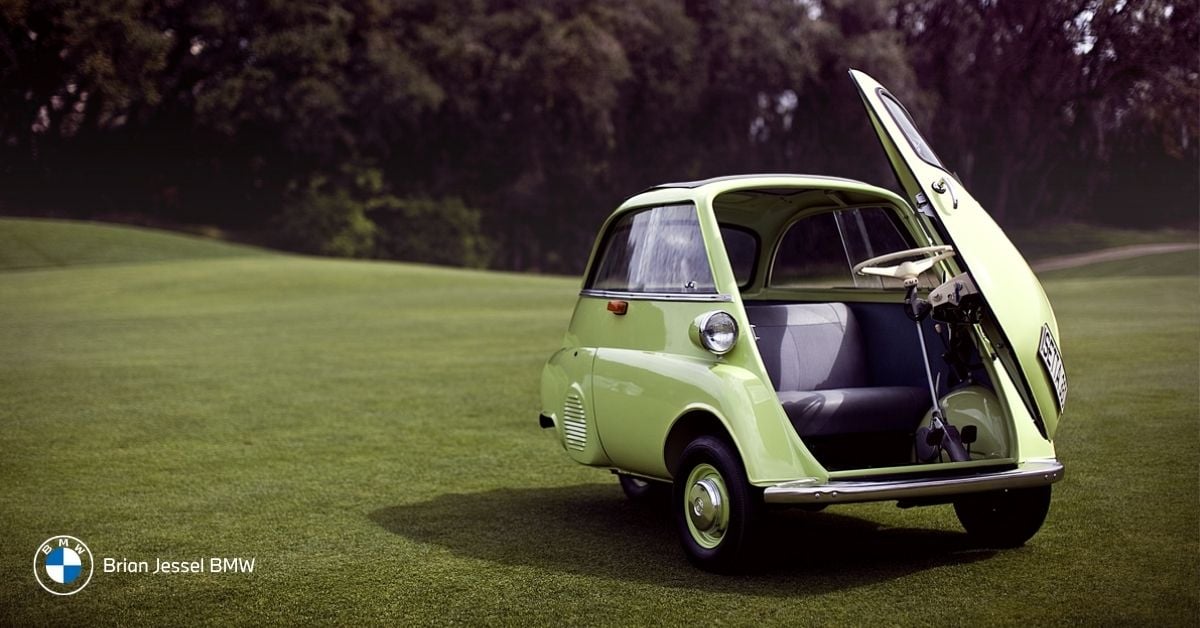
The BMW Isetta redefined microcar design with its compact size, front-opening door mechanism, and four-stroke engine. It prioritized urban practicality, offering exceptional fuel efficiency and maneuverability in crowded European cities. With its innovative entry system and simple construction, the Isetta became a unique solution for city dwellers.
Front-Opening Door Mechanism
The most striking feature was the single front door. The entire nose of the vehicle, including the steering column, swung outward. A universal joint at the base of the column allowed it to pivot with the door, making entry possible despite the narrow body.
This configuration served two purposes:
- It minimized overall width.
- It allowed curbside parking nose-in, enabling occupants to exit safely onto the sidewalk.
No conventional car had such an arrangement.
Compact Dimensions and Urban Practicality
At roughly 2.3 metres long and weighing around 385 kilograms, the Isetta occupied less space than most motorcycles with sidecars.
Its narrow rear track, wheels positioned closely together, eliminated the need for a differential. This simplified construction and reduced cost.
The design was tailored for dense European cities where parking space and fuel economy mattered more than highway performance.
Engine and Performance
BMW replaced Iso’s two-stroke “twingle” engine with a more robust single-cylinder four-stroke derived from the BMW R25/3 motorcycle. The Isetta 250 featured a 247 cc engine producing approximately 12 horsepower and was favoured in Germany due to tax advantages. The later Isetta 300 increased displacement to 298 cc, delivering around 13 horsepower with improved drivability and a higher top speed.
Acceleration was modest, but the torque characteristics were well suited to city driving. Power was sent through a four-speed manual gearbox that included reverse, a feature not universal among microcars at the time. Fuel efficiency was exceptional, often exceeding 60 mpg.
Safety and Structural Features
From a modern perspective, the BMW Isetta’s safety features were rudimentary. The design lacked key modern safety elements such as crumple zones, side-impact protection, or airbags. Its body was constructed using steel panels mounted on a lightweight tubular frame, which provided some structural integrity but limited crash protection, particularly in collisions with larger vehicles.
However, BMW made several technical improvements over the original Iso design to address stability and safety concerns:
Revised Suspension
The Isetta was equipped with coil springs at each corner, a significant upgrade over the original suspension system. This design improved road handling, ride quality, and vehicle stability, especially over uneven or bumpy surfaces, and reduced excessive body roll during turns.
Hydraulic Brakes
The Isetta featured hydraulic braking, replacing the previous cable-actuated system. This transition provided a more consistent and reliable braking performance, though it still required manual effort due to the absence of power-assisted brakes.
Improved Chassis Reinforcement
The Isetta’s chassis underwent reinforcement to improve structural rigidity, making the vehicle more stable under load and less susceptible to flexing. This enhancement contributed to better handling characteristics, especially compared to its three-wheeled counterparts, which often lacked adequate chassis support.
While the Isetta lacked modern safety features, its enclosed cabin provided more protection than motorcycles or three-wheelers, making it a safer choice for post-war Europe. Its lightweight frame and nimble handling also offered better stability and a more refined driving experience compared to other microcars of the era.
The Isetta 600: Expanding the Bubble
In 1957, BMW introduced the Isetta 600, a larger version of the original Isetta aimed at providing seating for four adults. It featured a new perimeter frame, a more powerful 582 cc air-cooled boxer twin engine, and semi-trailing arm rear suspension for improved handling. The 600 retained the iconic front-opening door but added a conventional rear side door for easier access to the rear seats.
However, despite its improvements, the Isetta 600 struggled to compete with the Volkswagen Beetle, which offered more space, better performance, and a similar price point. Production ended in 1959 after approximately 34,800 units, well below BMW’s expectations, making the 600 less of a breakthrough than the company had hoped for.
Cultural Impact: How the BMW Isetta Became a Symbol of an Era
The BMW Isetta became a symbol of post-war optimism in 1950s Europe. It represented:
- Accessibility to personal mobility
- Technical ingenuity with limited resources
- A shift from pre-war automotive designs
The Isetta even appeared in endurance events such as the Mille Miglia, typically competing in efficiency-focused or small-displacement categories rather than outright performance classes.
Why People Still Love It
People continue to admire the Isetta for its charm, uniqueness, and historical significance. As a microcar, it captures the imagination with its unconventional look and playful character.
Its simplicity and efficiency resonate with modern enthusiasts who value design ingenuity and the ability to do more with less. The Isetta’s distinct appearance and compact nature make it a conversation starter and a beloved collector’s item.
Its Influence on Microcar Culture
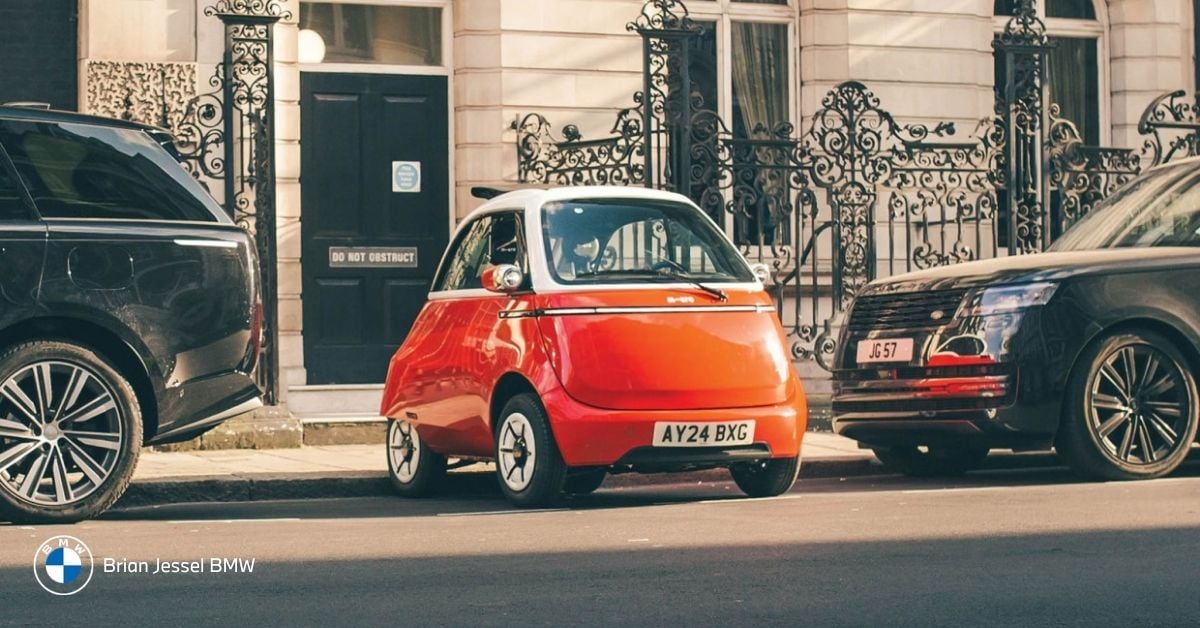
The Isetta also played a key role in shaping microcar culture. It was part of a wave of small, economical vehicles that emerged in post-war Europe, setting the stage for future microcars. Today, the Isetta’s design philosophy lives on in modern electric urban vehicles like the Microlino revival concept.
These vehicles echo the Isetta’s compactness and efficiency, making it a key inspiration in the development of micro-mobility solutions, which are becoming increasingly relevant in today’s crowded urban environments.
Did the BMW Isetta Really Save BMW?
The BMW Isetta was a pivotal model in the company's history, but the answer to whether it truly "saved" BMW is complex. The Isetta did not generate substantial profit per unit, but it had a critical role in BMW’s survival.
Sales Figures and Revenue Contribution
Over 160,000 BMW-built Isettas were produced, accounting for a substantial share of BMW’s total output in the mid-1950s. The Isetta maintained production lines, preserved jobs, and brought in steady revenue at a time when BMW’s other models, like the 503 and 507, were not selling well. The Isetta’s success allowed BMW to keep its manufacturing capacity intact while working on future models.
Transition from Microcars to Performance Sedans
The Isetta’s production volume helped BMW stabilize financially, but it wasn’t the long-term solution. It was a temporary bridge. In 1959, BMW launched the BMW 700, which was a step closer to a conventional small car, bridging the gap between the Isetta and the brand's future identity.
The Isetta’s success stabilized BMW’s finances and preserved its ability to continue developing new vehicles, preventing what could have been a complete shutdown of operations.
How BMW Repositioned Itself After Isetta
The Isetta’s success gave BMW the financial stability needed to move beyond survival and begin developing more conventional vehicles. Rather than continuing in the microcar segment, the company redirected its focus toward higher-value passenger cars that could support long-term growth.
From Isetta to Innovation: How BMW’s Philosophy Evolved
While the Isetta addressed an immediate financial crisis, its deeper impact was shaping how BMW approached engineering, adaptability, and long-term product strategy.
How Lessons from Isetta Influenced BMW Thinking
The Isetta period taught BMW crucial lessons in adaptability, efficient engineering, and compact packaging intelligence. It showed that even in challenging times, BMW could innovate within constraints. The Isetta was not just about building a small car; it was about surviving through ingenuity, a mindset that would carry through to future models.
Adaptability as a Brand Trait
BMW’s adaptability, learned from the Isetta, became central to its identity. This mindset carried forward into models like the BMW 700 and later the Neue Klasse, where efficiency, engineering discipline, and driver-focused design became defining traits.
The Isetta represents BMW’s transition from crisis-driven innovation to a consistent focus on engineering excellence and driving experience, values that remain central to the brand.
The journey from microcars like the Isetta to today’s advanced BMW electric vehicles reflects a continuous focus on efficiency and innovation.
Today, BMW continues this legacy of innovation through its modern lineup of electric and performance vehicles, which you can explore in our BMW vehicle inventory.
Why the Isetta Still Matters to Vancouver Collectors
In recent years, auction prices for well-restored Isettas have ranged between USD $25,000 and $50,000, with rare variants or low-mileage examples exceeding this. These vehicles are becoming "blue-chip" collectibles, with increasing demand from collectors seeking unique, heritage-rich cars.
For collectors in Vancouver, the Isetta holds special appeal for several reasons:
- It represents a key moment in European post-war design history.
- Its compact size makes it ideal for urban display.
- It stands out from typical classic cars, with a design that remains a symbol of innovation.
Brian Jessel BMW, established in the early 1970s, built its foundation on European import vehicles and a long-standing commitment to precision and customer service. Over the decades, the dealership has grown alongside the BMW brand, reflecting its evolution from historic models to today’s advanced lineup.
While the showroom now features BMW’s latest vehicles, models such as the BMW Isetta remain an important part of the brand’s global heritage. For collectors, the Isetta represents a formative period in BMW’s development and continues to hold historical significance within the marque’s legacy.
For owners of both classic and modern BMW vehicles, proper maintenance remains essential, supported by dedicated BMW service and maintenance programs.
Buyers interested in modern BMW models can also explore flexible financing and leasing options tailored to their needs.
FAQs
What year was the BMW Isetta made?
The BMW Isetta was produced between 1955 and 1962.
How much did it cost originally?
The BMW Isetta was originally priced at approximately 2,550 Deutsche Marks in 1955, positioning it as an affordable mobility solution in post-war Germany.
How fast could it go?
The top speed of the Isetta was approximately 85 km/h (53 mph).
Is the BMW Isetta rare today?
Yes, the BMW-built Isetta is relatively rare today. While BMW produced over 160,000 units, far fewer remain in drivable or restored condition, increasing their desirability among collectors.
Why did BMW stop making it?
Production ended in 1962 as demand shifted towards larger vehicles, and BMW focused on more conventional models.
How many were produced?
BMW produced over 160,000 Isettas during its production run from 1955 to 1962.
Explore Latest Models Here: 2025 BMW Cars, BMW Gas Vehicles, BMW Electric Car, BMW M Series for Sale, BMW Luxury Line for Sale, BMW Convertible, 2025 BMW 5 Series 530i xDrive, 2024 BMW X3 M40i xDrive, BMW X Series Comparison, BMW 3 Series G50, 2026 BMW M2 xDrive G87, 2026 BMW X5 G65